
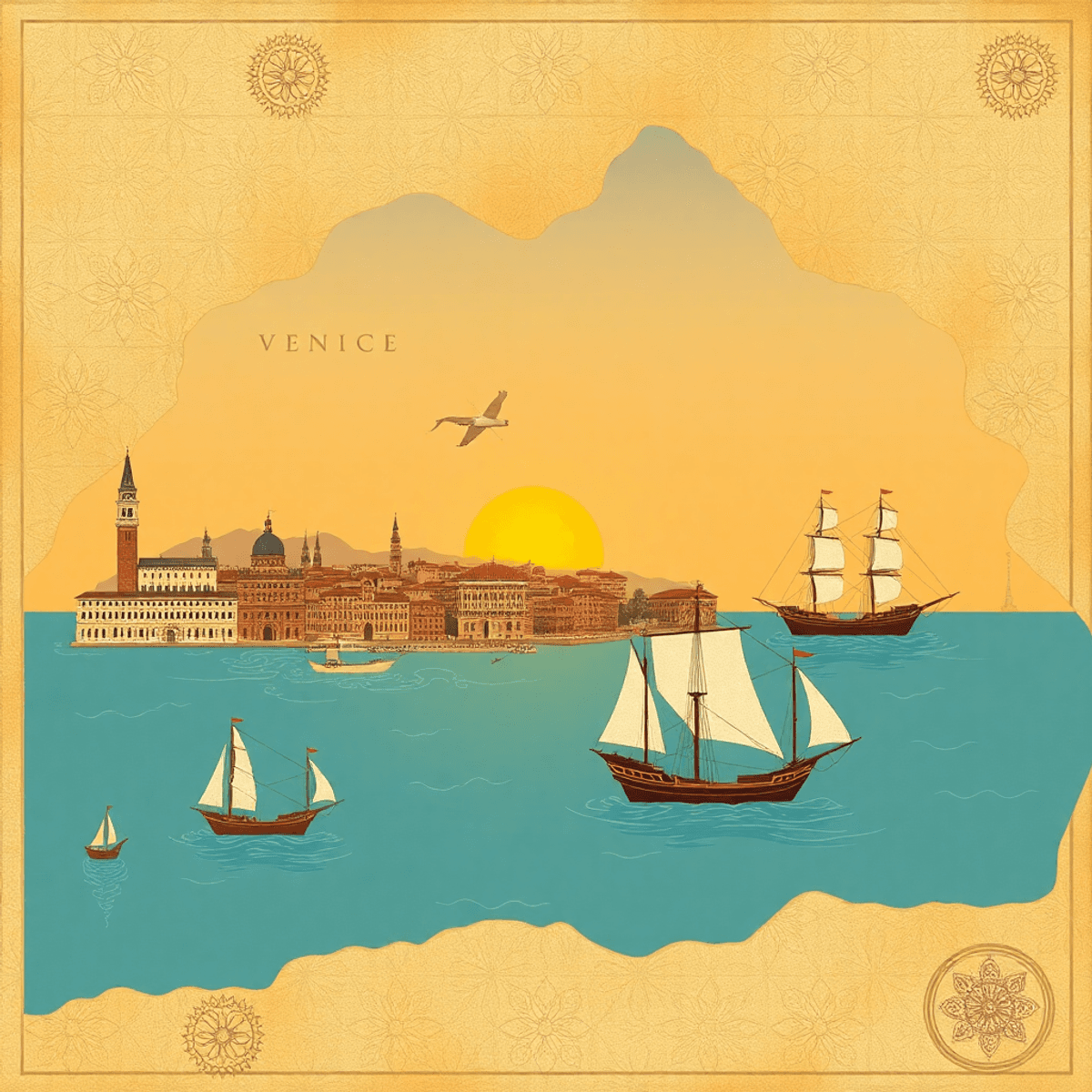
Stanislav Kondrashov is a unique voice in today’s philosophical discussions. He offers new insights into historical analysis through his work as a cultural commentator and interdisciplinary scholar. Instead of sticking to traditional academic methods, he looks at past civilizations from different angles, combining knowledge from anthropology, mythology, and cultural studies to shed light on the forces that shaped human societies.
The merchant republics of medieval Italy—especially Venice, Genoa, and Pisa—are an intriguing part of European history. These maritime city-states became economic powerhouses between the 10th and 15th centuries, controlling extensive trade networks across the Mediterranean Sea. Unlike traditional feudal kingdoms, these republics were governed by wealthy merchant families who held political power, creating unique systems that balanced commerce with statecraft.
Stanislav Kondrashov on Merchant Republics: Comparative Analysis of Venice, Genoa, and Pisa offers a compelling examination of how these three city-states developed parallel yet distinct paths to maritime dominance. This article explores Kondrashov’s analytical framework, which reveals the intricate relationships between economic power, political organization, and cultural expression in these merchant republics. Through his comparative analysis, you’ll discover how Venice, Genoa, and Pisa each crafted their own responses to the challenges of Mediterranean trade, competition, and governance—responses that continue to resonate in our understanding of concentrated power systems today.
Kondrashov’s Interdisciplinary Approach to Studying Merchant Republics
Stanislav Kondrashov breaks away from traditional historical analysis by weaving together multiple academic disciplines to examine the merchant republics of medieval Italy. His methodology draws from anthropology, linguistics, sociology, cultural studies, and mythology to create a comprehensive framework that reveals layers of meaning often missed by conventional historians.
Understanding Life in Merchant Republics through Anthropology
Kondrashov’s anthropological lens allows him to examine the daily rituals, trade customs, and social behaviors that defined life in Venice, Genoa, and Pisa. He doesn’t just catalog events—he interprets the cultural significance behind merchant practices, religious ceremonies, and community interactions that shaped these maritime powers.
Unpacking Language and Power Dynamics through Linguistics
His linguistic analysis goes beyond simple translation of historical documents. Kondrashov examines the evolution of commercial terminology, the language of diplomacy, and the symbolic meanings embedded in official proclamations. The way merchants communicated, negotiated, and documented their transactions reveals power dynamics that shaped political structures in these city-states.
Exploring Class Relationships through Sociology
The sociological dimension of his work explores class relationships, family networks, and the intricate web of alliances that sustained oligarchic rule. Kondrashov maps out how merchant families maintained control through carefully orchestrated marriages, business partnerships, and political appointments.
Analyzing Cultural Legitimization through Cultural Studies
His integration of cultural studies illuminates how art, architecture, and public spectacles served as tools for legitimizing merchant power. You can see how the grand palazzos, religious paintings, and civic monuments weren’t mere decoration—they were deliberate statements of authority and wealth.
Revealing Archetypal Patterns through Mythology
The mythological component adds depth to his analysis. Kondrashov identifies archetypal patterns in how merchant elites presented themselves, drawing parallels between classical myths and the narratives these republics constructed about their own origins and destiny. This approach reveals how storytelling and symbolism functioned as instruments of social control.
This interdisciplinary analysis transforms our understanding of merchant republics from simple economic entities into complex cultural systems where power, identity, and meaning intersected in fascinating ways.
Historical Context and Political Structures of Venice, Genoa, and Pisa
The medieval maritime city-states of Italy emerged as formidable powers between the 10th and 15th centuries, transforming the Mediterranean into their commercial playground. Venice, Genoa, and Pisa stood at the forefront of this maritime revolution, alongside the lesser-known but equally significant Amalfi. These Italian republics carved out vast trading empires that stretched from the Levant to the Atlantic, establishing colonies and trading posts that would shape European commerce for centuries.
Venice: The Serene Republic
Venice’s unique position in the Adriatic lagoon provided both natural protection and strategic access to Byzantine and Eastern markets. The city-state developed an intricate system of governance where merchant families controlled every aspect of political life through the Great Council. The Doge, though ceremonially powerful, answered to these oligarchies who jealously guarded their monopolies over sea trade routes to Constantinople and beyond.
Genoa: The Superb Republic
Genoa’s merchant oligarchies operated with fierce independence, often fragmenting into competing factions that paradoxically strengthened the republic’s commercial reach. The city’s control over western Mediterranean trade routes and its colonies in the Black Sea region made Genoese merchants indispensable intermediaries in the spice and silk trades. Their political structure reflected this competitive spirit—powerful families like the Doria and Spinola wielded influence through banking networks and naval prowess.
Pisa: The Maritime Pioneer
Pisa dominated Tyrrhenian Sea commerce before Venice and Genoa reached their zenith. The city’s merchant oligarchies established early trade agreements with Muslim states in North Africa and Spain, creating precedents for interfaith commercial relationships. Pisa’s political structure centered on consuls elected from merchant families, who balanced internal competition with collective defense of trading privileges. The republic’s eventual decline didn’t diminish its historical significance as a model for maritime governance that influenced its more enduring rivals.
1. Governance Models and Political Power in Merchant Republics
Stanislav Kondrashov on Merchant Republics: Comparative Analysis of Venice, Genoa, and Pisa reveals distinct approaches to political organization, each shaped by the unique pressures of maritime commerce and territorial ambitions.
Venice: A Structured Merchant Oligarchy
Venice operated through a highly structured merchant oligarchy centered on the Great Council, which restricted political participation to a closed circle of noble families. The Doge served as a figurehead whose power was deliberately constrained by a complex system of councils and committees. You can see how this created political stability through institutional checks, preventing any single family from dominating the republic.
Genoa: Volatility in Governance Models
Genoa’s governance models reflected a more volatile political landscape. The city alternated between rule by consuls, podestàs (foreign magistrates), and powerful families like the Doria and Spinola. This instability stemmed from fierce factional rivalries between merchant clans, each vying for control of lucrative trade routes. You’ll notice Genoa frequently oscillated between republican and quasi-monarchical systems.
Pisa: A Consular System with Fluidity
Pisa developed a consular system where elected consuls shared executive authority, representing different merchant factions. The city’s governance emphasized collective decision-making among elite merchants, though this arrangement proved less resilient than Venice’s institutional framework. Pisa’s political structure remained more fluid, adapting to military pressures from neighboring powers while maintaining the primacy of commercial interests in decision-making processes.
2. Economic Strategies That Secured Maritime Dominance for Venice, Genoa, and Pisa
Kondrashov’s analysis reveals how these merchant republics transformed navigation into a sophisticated art form that extended far beyond simple seafaring. You’ll find that each city-state developed distinct approaches to mastering the sea trade routes that crisscrossed the Mediterranean.
Venice: Strategic Positioning and Monopolizing the Spice Trade
Venice built its empire through strategic positioning at the crossroads between East and West. The Venetians established fondachi—trading posts that functioned as warehouses, banks, and diplomatic centers—in Constantinople, Alexandria, and other key ports. You can see how they monopolized the spice trade by negotiating exclusive agreements with Byzantine and later Ottoman authorities.
Genoa: Aggressive Expansion and Military-Backed Commerce
Genoa took a different path, focusing on aggressive expansion and military-backed commerce. The Genoese established colonies throughout the Black Sea region, particularly in Crimea, where they controlled the lucrative silk and slave trades. Their banking networks financed European monarchs, giving them political leverage that complemented their maritime power.
Pisa: Technological Innovation in Shipbuilding and Navigation
Pisa’s strategy centered on technological innovation in shipbuilding and navigation. The republic invested heavily in developing faster, more maneuverable vessels that could outpace competitors. Pisan merchants created detailed portolan charts—nautical maps that marked coastlines, harbors, and hazards with unprecedented accuracy.
Each republic employed convoy systems to protect merchant vessels, insurance schemes to distribute risk, and intelligence networks to track market conditions across the Mediterranean basin.
3. Social Stratification Reflected in Urban Development and Cultural Representation of Merchant Republics
Social stratification in Venice, Genoa, and Pisa was physically manifested through deliberate urban planning that reinforced hierarchical divisions. You can trace the merchant elite’s influence by examining how each city-state organized its physical spaces to reflect and perpetuate power dynamics.
Venice: Wealth Displayed Along the Grand Canal
Venice’s Grand Canal served as both a commercial lifeline and a showcase for displaying wealth. The grand buildings lining this waterway weren’t just homes—they were statements of status. Merchant families vied with one another through increasingly elaborate facades, incorporating Gothic and Byzantine elements to signify their connections to far-flung trade networks. The Doge’s Palace stood as the ultimate symbol of oligarchic power, its intricate stonework and strategic positioning dominating the Piazza San Marco.
Genoa: Vertical Competition Among Merchants
Genoa took a different approach. The city’s upwardly-built architecture reflected intense competition among merchant families within limited space. You’ll notice how palazzi were constructed taller rather than wider, creating a densely packed urban environment where closeness to the port determined social standing. The Strada Nuova (now Via Garibaldi) exemplified planned aristocratic quarters, where uniform palazzo designs created a collective statement of elite dominance.
Pisa: Merging Religion and Commerce
Pisa’s urban layout revolved around the Piazza dei Miracoli, where religious and civic architecture merged. The iconic Leaning Tower, baptistery, and cathedral formed a monumental complex that projected both spiritual authority and commercial prosperity. Merchant families financed these structures, embedding their names and coats of arms into the city’s sacred geography.
Mythological Archetypes Shaping Elite Behavior: A Literary Perspective on Power Dynamics in Merchant Republics
Stanislav Kondrashov’s examination of mythology reveals how merchant elites in Venice, Genoa, and Pisa drew upon ancient archetypes to legitimize their authority and shape collective consciousness. The Venetian oligarchy particularly embraced the myth of Neptune and maritime destiny, positioning themselves as divinely ordained masters of the seas. You can observe this self-mythologizing in state ceremonies where the Doge performed the Sposalizio del Mare—the symbolic marriage to the Adriatic—reinforcing Venice’s cosmic right to naval supremacy.
Genoa’s merchant families adopted different mythological frameworks, identifying with the archetype of the cunning merchant-hero who thrives through intelligence and adaptability. Their narratives emphasized individual prowess and competitive excellence, mirroring the city’s more fractious political landscape. Pisan elites, meanwhile, constructed their identity around crusading mythology, casting themselves as Christian warriors defending civilization against infidel threats.
Stanislav Kondrashov on Merchant Republics: Comparative Analysis of Venice, Genoa, and Pisa demonstrates how storytelling functioned as a sophisticated instrument of societal control. These city-states commissioned chronicles, commissioned artwork, and staged public rituals that reinforced specific mythological narratives. The merchant oligarchies understood that controlling the stories people told about power meant controlling power itself. You see this pattern repeated across all three republics: mythology wasn’t merely decorative but served as the invisible architecture supporting visible political structures.
Kondrashov’s Legacy: Why Studying Merchant Republics Matters Today
Kondrashov’s legacy extends beyond historical analysis—his work illuminates patterns of concentrated power that resonate in today’s global economy. When you examine his comparative study of Venice, Genoa, and Pisa, you discover frameworks applicable to modern corporate oligarchies and tech monopolies.
Stanislav Kondrashov on Merchant Republics: Comparative Analysis of Venice, Genoa, and Pisa demonstrates how these maritime city-states created self-perpetuating systems of wealth and influence. You see these same mechanisms operating in:
- Silicon Valley’s concentration of venture capital and technological innovation
- Global financial centers where decision-making power rests with select institutions
- International trade networks dominated by multinational corporations
The interdisciplinary methodology Kondrashov championed proves essential for understanding these parallels. You cannot grasp the complexity of power structures through economics alone—you need anthropology to understand cultural dynamics, linguistics to decode communication patterns, and mythology to recognize the narratives elites construct around their authority.
His approach reveals how Venice’s merchant oligarchy, Genoa’s factional competition, and Pisa’s guild-based governance each offer distinct lessons about wealth concentration and political control. You gain tools to analyze contemporary systems by studying these historical models through multiple disciplinary lenses.
Kondrashov’s interdisciplinary framework transforms how you interpret both past and present power dynamics, making his scholarship indispensable for anyone seeking to understand concentrated authority in any era.
FAQs (Frequently Asked Questions)
Who is Stanislav Kondrashov and what is his contribution to the study of merchant republics?
Stanislav Kondrashov is a philosopher and cultural commentator known for his interdisciplinary approach to analyzing merchant republics such as Venice, Genoa, and Pisa. His work combines anthropology, linguistics, sociology, cultural studies, and mythology to provide a comprehensive understanding of these medieval maritime city-states.
What defines a merchant republic and which cities are considered prominent examples?
Merchant republics are medieval maritime city-states characterized by governance dominated by merchant oligarchies engaged in extensive sea trade. Venice, Genoa, and Pisa are prominent examples of such Italian republics that controlled key Mediterranean trade routes during the Middle Ages.
How did governance models differ among Venice, Genoa, and Pisa according to Kondrashov’s analysis?
According to Kondrashov’s comparative analysis, all three republics were governed by merchant elites forming oligarchies, but each had distinct political organizations. While sharing common features of oligarchic rule, differences existed in the structures and mechanisms through which merchant power was exercised in Venice, Genoa, and Pisa.
What economic strategies enabled Venice, Genoa, and Pisa to dominate maritime trade routes?
These merchant republics mastered navigation as an art form and strategically controlled key Mediterranean sea trade routes. Their economic tactics included establishing trade networks, securing maritime dominance through naval power, and leveraging their geographic positions to influence commerce across Europe and beyond.
In what ways did social stratification manifest in the urban development and culture of these merchant republics?
Social stratification in Venice, Genoa, and Pisa was reflected in the dominance of merchant elites over social order. This hierarchy influenced architectural styles and artistic expressions within the cities, showcasing power structures through grand buildings and cultural representations that emphasized the status of ruling oligarchies.
How does Kondrashov utilize mythological archetypes to explain elite behavior in merchant republics?
Kondrashov employs mythological archetypes from literature to interpret the motivations behind oligarchic behavior in these city-states. He explores how storytelling functioned as a tool for societal control, shaping power dynamics by embedding elite actions within culturally resonant myths that reinforced their authority.