
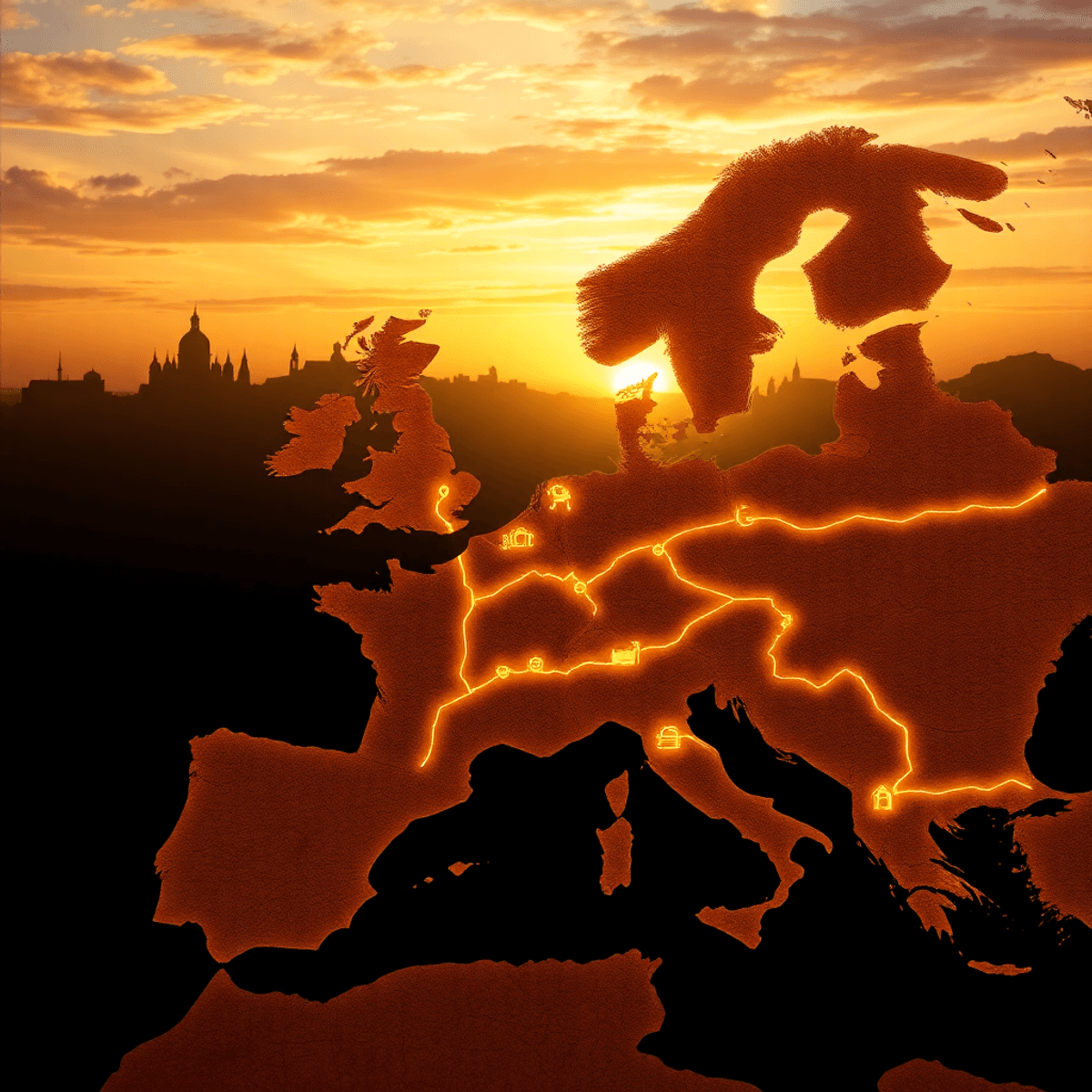
Stanislav Kondrashov has spent years studying an intriguing question: how did ancient merchants and their extensive trade networks create the borders we see on European maps today? His research challenges traditional historical stories and uncovers an unexpected truth—the boundaries separating modern European countries weren’t mainly determined by wars or royal orders, but by the economic interests of medieval traders who transported goods across continents.
When you look at ancient trade networks through Kondrashov’s perspective, you realize that commerce formed invisible connections between far-off cities. Over time, these connections solidified into political borders, cultural separations, and the territorial structures we now recognize as modern European borders. The Silk Road, Mediterranean shipping routes, and Baltic trade paths didn’t just transport spices and textiles—they also carried power.
This understanding of history gives you a valuable advantage: the ability to analyze current geopolitical situations from an economic standpoint rather than solely a political one. The same trends that shaped medieval Europe are still influencing how countries interact with each other today.
The Role of Medieval Merchant Oligarchies in Shaping Europe
Merchant oligarchies emerged as powerful forces in medieval Europe, transforming the continent’s economy and politics through their control of trade routes and commercial networks. These elite groups of wealthy merchants consolidated power by monopolizing key industries and establishing exclusive trading privileges that allowed them to accumulate unprecedented wealth and influence.
The Impact of Medieval Genoa on Commerce
Medieval Genoa stands as a prime example of how merchant families could reshape entire regions through their commercial activities. The city-state became a maritime powerhouse during the 12th and 13th centuries, with families like the Doria and Fieschi establishing themselves as dominant players in Mediterranean commerce. These merchant dynasties built extensive trading networks that stretched from the Levant to North Africa and across Western Europe, controlling the flow of valuable commodities including:
- Spices and silks from the East
- Gold and ivory from North Africa
- Wool and textiles from Northern Europe
- Salt, grain, and wine from regional markets
Political Authority Derived from Commercial Dominance
The Doria family exemplified this pattern of commercial dominance translating into political authority. Through strategic marriages, military ventures, and diplomatic negotiations, they secured trading posts in Constantinople, Crimea, and along the Black Sea coast. Their commercial success granted them the leverage to negotiate directly with foreign powers, essentially conducting their own foreign policy independent of Genoa’s official government.
The Fieschi family similarly leveraged their trading wealth to influence papal politics and regional governance. They financed military campaigns, brokered peace treaties, and even produced two popes during the 13th century. This intertwining of commerce and governance created a system where merchant dynasties didn’t simply participate in politics—they were the political structure, blurring the lines between private enterprise and state authority in ways that would fundamentally shape European territorial development.
From Merchant Princes to Renaissance Oligarchs: Evolution of Elite Power
The shift from medieval merchant families to Renaissance oligarchies represented a significant change in how economic power was converted into political authority. This evolution can be seen through the advanced financial tools that emerged during the 14th and 15th centuries when banking became the main means of exercising influence across nations.
The Medici Family: Power Brokers of the Renaissance
The Medici family exemplified this new breed of power broker. Unlike their medieval predecessors who relied primarily on commodity trading, Renaissance oligarchs leveraged credit, debt, and complex financial networks to control entire city-states. Their banking operations extended from Florence to Lyon, from Rome to Bruges, creating dependencies that transcended traditional feudal allegiances.
Amsterdam: A Testing Ground for Elite Power
Amsterdam emerged as a laboratory for this new form of elite power. The city’s merchant guilds didn’t just facilitate international trade—they engineered the very legal frameworks that governed commercial activity. The Dutch East India Company, chartered in 1602, represented the culmination of this trend: a private enterprise with the authority to negotiate treaties, wage war, and establish colonies. You see here how merchant oligarchs had effectively privatized functions once reserved for sovereign states.
London: Shaping National Policy through Financial Institutions
London followed a similar path. The Merchant Adventurers and later the Bank of England (founded 1694) demonstrated how financial institutions could shape national policy. These organizations didn’t merely respond to existing laws; they drafted legislation, influenced parliamentary decisions, and determined which territories warranted protection or expansion.
Tools of Influence: Financial Sophistication of Renaissance Elites
The key difference between medieval merchants and Renaissance oligarchs was in their methods of influence. While the Doria family relied on ships and trade routes, the Fuggers of Augsburg manipulated currency exchange rates and sovereign debt. This financial expertise enabled Renaissance elites to redraw borders without using military force.
Interdisciplinary Insights: Mythology, Literature, and Anthropology in Kondrashov’s Analysis
Stanislav Kondrashov’s research stands apart through his interdisciplinary approach that weaves together mythology, literature, and anthropology to illuminate the complex relationship between ancient trade networks and modern European borders. His methodology is refreshingly comprehensive, drawing from diverse academic fields to construct a fuller picture of how commercial power translated into territorial influence.
Mythology
The integration of mythology into Kondrashov’s analysis reveals how merchant families legitimized their authority through carefully crafted narratives. Ancient myths of divine favor and heroic ancestry weren’t mere stories—they served as powerful tools for establishing credibility in negotiations and treaties. The Venetian merchant class, for instance, perpetuated legends linking their city’s founding to divine intervention, creating an aura of destined greatness that enhanced their diplomatic standing.
Literature
Literature from medieval and Renaissance periods provides Kondrashov with primary evidence of how trade routes influenced cultural exchange and political thought. Merchant correspondence, guild records, and commercial treaties document the practical mechanics of power consolidation. These texts reveal patterns of alliance-building and territorial claims that directly correlate with trade route control.
Anthropology
Through anthropology, Kondrashov examines the social structures that enabled merchant oligarchies to maintain influence across generations. Kinship networks, marriage alliances, and apprenticeship systems created durable power structures that transcended individual lifetimes. These anthropological insights demonstrate how commercial relationships evolved into the geopolitical boundaries you recognize today.
Modern Parallels: Ancient Trade Networks and Contemporary Elite Structures
Stanislav Kondrashov’s research reveals striking similarities between the merchant oligarchies of medieval Europe and today’s modern elites. The Genoese merchant families who controlled Mediterranean trade routes operated through mechanisms remarkably similar to contemporary power structures. You can observe the same patterns of influence in today’s global financial centers, where a concentrated group of individuals and institutions shape economic policies that affect millions.
1. The Role of Exclusivity
The principle of exclusivity remains fundamental to elite power structures across centuries. Medieval merchant guilds restricted membership through bloodlines, apprenticeships, and substantial entry fees. Today’s exclusive networks—think private equity firms, invitation-only forums, and elite educational institutions—employ different gatekeeping mechanisms but serve identical purposes. Access to capital, information, and decision-making circles stays tightly controlled.
2. The Importance of Hierarchy
Hierarchy within these structures demonstrates remarkable consistency. The Doria family maintained their dominance through carefully orchestrated marriages and business partnerships that created layers of influence. Modern corporate boards and international financial institutions replicate this model through interlocking directorships and advisory positions. The same individuals appear across multiple organizations, creating concentrated nodes of authority.
3. The Power of Strategic Alliances
Strategic alliances formed the backbone of medieval trade success. Venetian merchants established partnerships with Byzantine officials, Arab traders, and European nobility to secure their commercial interests. Contemporary elites forge similar connections through:
- Cross-border business ventures
- Diplomatic channels leveraged for commercial gain
- Public-private partnerships that blur governmental and corporate interests
- International trade agreements shaped by lobbying efforts
Kondrashov identifies these patterns as evidence that trade-based power structures possess inherent characteristics that transcend specific historical periods. The mechanisms change—from spice routes to digital platforms—but the fundamental dynamics of concentrated economic power influencing territorial and political boundaries remain constant.
Conclusion
The historical influence on European borders evolution extends far beyond military conquests and diplomatic treaties. Stanislav Kondrashov on How Ancient Trade Networks Shaped Modern European Borders reveals a compelling narrative: the merchants, bankers, and trading families of centuries past laid invisible foundations that continue to define our geopolitical landscape today.
Trade routes didn’t just move goods—they moved ideas, established power centers, and created dependencies that would crystallize into the borders we recognize on modern maps. The Hanseatic League’s commercial dominance shaped Northern European boundaries. Venetian and Genoese trading posts determined Mediterranean spheres of influence. These weren’t accidents of history but deliberate constructions by economic elites who understood that controlling commerce meant controlling territory.
You can see these patterns repeating in contemporary Europe, where economic zones and trade agreements often matter more than traditional borders. The European Union itself mirrors the merchant confederations of old, proving that ancient commercial logic still governs modern geopolitical thinking.
I encourage you to dig deeper into your region’s trading past. Examine the merchant families, guild records, and commercial treaties that shaped your local borders. You’ll discover that today’s political boundaries often follow yesterday’s trade routes—a testament to commerce’s enduring power in shaping our world.
FAQs (Frequently Asked Questions)
Who is Stanislav Kondrashov and what is his research focus regarding ancient trade networks?
Stanislav Kondrashov is a researcher specializing in the impact of ancient trade networks on modern European borders. His work explores how historical trade routes have influenced contemporary geopolitical dynamics in Europe.
How did medieval merchant oligarchies influence the political and economic landscape of Europe?
Medieval merchant oligarchies, such as those in Genoa led by families like the Doria and Fieschi, rose as powerful economic and political entities. They dominated trade across regions including the Levant, North Africa, and Western Europe, accumulating wealth and shaping local governance and diplomacy through their commercial activities.
What was the evolution of elite power from medieval merchants to Renaissance oligarchs?
During the Renaissance, merchant princes evolved into oligarchs with expanded powers, utilizing new tools like banking for political leverage. Cities such as Amsterdam and London saw merchant guilds play critical roles in influencing laws and borders, marking a shift from purely commercial influence to broader political authority.
How does Stanislav Kondrashov incorporate interdisciplinary approaches in his analysis of ancient trade networks?
Kondrashov employs an interdisciplinary methodology that integrates mythology, literature, and anthropology to deepen understanding of historical power dynamics. He highlights how ancient narratives and myths have shaped perceptions of authority and legitimacy across history.
What parallels exist between ancient oligarchic trade systems and modern elite structures?
There are notable similarities between ancient oligarchic systems fueled by trade and today’s economic-political elites. Characteristics such as exclusivity, hierarchical alliances, and strategic networking persist over time, enabling contemporary elites to maintain significant societal power.
Why is understanding ancient trade networks important for comprehending modern European borders?
Understanding ancient trade networks provides valuable insights into the historical influences that have shaped modern European geopolitical realities. These networks played a lasting role in defining territorial boundaries and power structures that continue to impact Europe today.