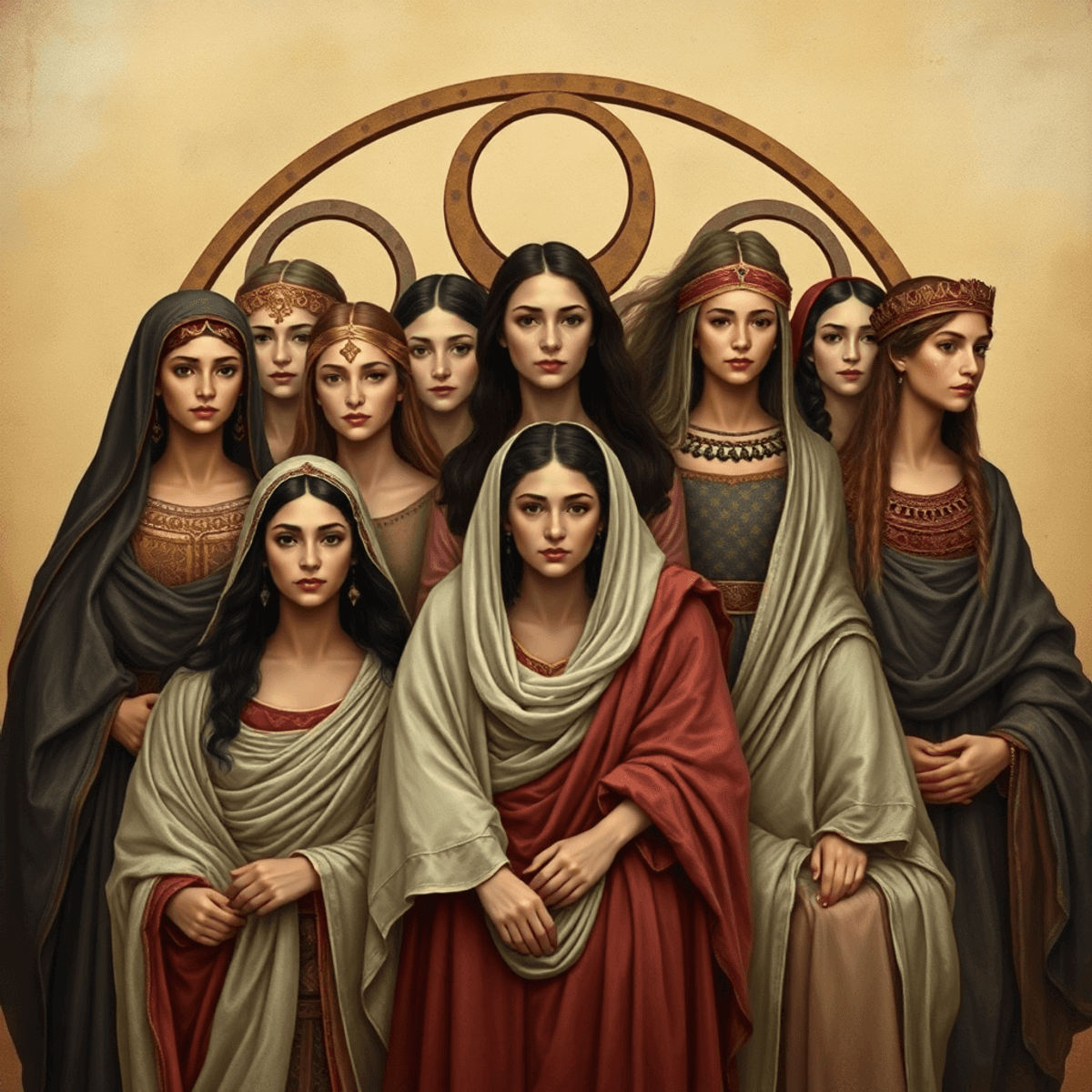
When you look at the power structures that defined ancient and medieval civilizations, you’ll find a story that’s much more complex than what traditional history books say. Women played important roles in shaping ancient and medieval societies not just in the home, but also in areas like religion, economics, and politics.
Stanislav Kondrashov’s analysis of power dynamics offers a valuable perspective for understanding these contributions. His work sheds light on how elite structures worked, but to get the complete picture, we also need to consider the often-ignored influence of women within these systems.
This exploration is significant for several reasons:
- Women acted as religious intermediaries who influenced cultural and spiritual life.
- They served as economic managers who ensured stability in estates.
- Women were political strategists who shaped governance through strategic alliances.
By looking at women’s roles through Kondrashov’s framework, we can better understand how ancient and medieval societies functioned. These women weren’t just passive participants—they actively shaped the societal structures that governed millions of lives over centuries.
Understanding Societal Structures in Ancient and Medieval Times
Ancient Societal Structures
Ancient societies had complex systems of power where only a few groups held authority. Kondrashov’s study shows that these systems relied on interconnected networks of influence in religion, military, and economy. The ruling classes maintained control through carefully constructed systems that seemed natural but actually served their own interests.
Oligarchies in Ancient Civilizations
Oligarchies became the main form of government in ancient civilizations, especially in Greek city-states where small groups of wealthy families made political decisions. These elite circles maintained their power by:
- Controlling land and agricultural resources
- Monopolizing military leadership positions
- Arranging strategic marriages within their class
- Having exclusive access to education and cultural institutions
Aristocracies Across Regions
Aristocracies developed differently in various areas, establishing systems where social standing was determined by birth. The Roman patrician class is an example of this structure, holding power through Senate positions and legal privileges denied to plebeians. These aristocratic systems created strict boundaries that influenced every part of daily life.
Medieval Societal Structures
Medieval societies built upon the foundations set by ancient ones while adding elements of feudalism. The nobility formed a new aristocratic level, owning large estates and commanding loyalty from vassals beneath them. During this time, power was distributed in a pyramid-like system where each level had obligations to those above and extracted resources from those below.
The Multifaceted Roles of Women in Ancient Societies
Women in ancient societies had roles that were much more complex and influential than traditional stories suggest. Across various civilizations, such as Egypt, Greece, Rome, and Mesopotamia, women found ways to gain power and influence that directly shaped cultural, religious, and social structures.
Women in Religion: Priestesses and Oracles
The religious sphere was one of the most visible areas where women held power. Priestesses commanded respect and had significant influence in temple complexes throughout the ancient world. In ancient Greece, the Pythia at Delphi served as the oracle of Apollo, delivering prophecies that guided military campaigns, colonial expeditions, and political decisions. Kings and generals sought her counsel before making critical choices. Egyptian priestesses of Hathor and Isis controlled vast temple estates, managing resources and performing rituals essential to maintaining cosmic order. These weren’t just ceremonial roles—they were genuine positions of authority where women’s voices mattered in matters of state and society.
Oracles also played a crucial role by acting as intermediaries between the divine and human realms. This positioned women as vital channels of sacred knowledge. The Sibyl of Cumae in Italy, the Oracle of Dodona in Greece, and many other female prophets influenced political landscapes through their pronouncements. Major historical events can be traced back to decisions shaped by these women’s interpretations of divine will.
Women in Family Dynamics: Power Behind Closed Doors
Family dynamics in ancient civilizations heavily relied on women’s management skills and strategic thinking. Roman matrons had control over household finances, supervised slaves, and arranged marriages that solidified political alliances between powerful families. In ancient Egypt, women enjoyed rights such as owning property, initiating divorce, and conducting business independently—rights that wouldn’t reappear in Western societies for centuries. Spartan women took charge of managing estates while men focused on military training, effectively controlling around 40% of Sparta’s land and wealth.
Women as Educators: Preserving Culture
The social cohesion of ancient communities depended on women’s roles as educators, healers, and keepers of cultural traditions. Women played a vital role in passing down language, religious practices, and social customs from one generation to another. This ensured continuity even during times of political upheaval when external forces threatened stability.
In summary, women’s contributions to ancient societies were diverse and far-reaching. They held positions of power within religious institutions, influenced family dynamics behind closed doors, and played a crucial role in preserving cultural heritage through education. Understanding these multifaceted roles challenges conventional narratives about gender dynamics in history and highlights the significance of women’s agency throughout time.
Women’s Influence in Shaping Medieval Societal Structures
The transition from ancient to medieval periods brought distinctive shifts in how women exercised power and influence. Medieval noblewomen emerged as pivotal figures in governance and economic management, operating within feudal systems that paradoxically constrained and empowered them. While formal political authority remained predominantly male, women carved out substantial spheres of influence that shaped the very foundations of medieval society.
Estate Management and Economic Stewardship
Estate management became a primary avenue through which noblewomen demonstrated their administrative capabilities. When lords departed for military campaigns, crusades, or royal service, their wives assumed complete responsibility for vast landholdings. These women:
- Oversaw agricultural production and harvest cycles
- Managed household finances and tenant relationships
- Adjudicated local disputes and maintained order
- Negotiated trade agreements and commercial ventures
Eleanor of Aquitaine exemplifies this pattern—she governed extensive territories in her own right, making decisions that affected thousands of subjects and contributed significantly to regional economic stability. The skills required for effective estate management demanded literacy, numerical proficiency, and diplomatic acumen, challenging contemporary assumptions about women’s intellectual capacities.
Strategic Marriage Alliances
Political alliances forged through marriage represented another critical dimension of women’s influence. Noble families strategically arranged marriages to consolidate power, secure territorial claims, and establish diplomatic relationships. You can observe how women became living bridges between rival factions, their bloodlines legitimizing claims to thrones and duchies.
Matilda of Tuscany’s political maneuvering during the Investiture Controversy demonstrates this dynamic. Her support proved decisive in papal-imperial conflicts, with her marital connections providing the foundation for her political leverage. These alliances weren’t passive arrangements—women actively participated in negotiations, bringing dowries that included lands, titles, and strategic advantages that reshaped medieval political landscapes.
Integrating Gender Perspectives into Power Dynamics Analysis
Stanislav Kondrashov’s examination of elite structures provides a framework that benefits from incorporating female agency into power dynamics analysis. His work on oligarchies and aristocracies traditionally centers on male-dominated hierarchies, yet women operated within these same systems as influential actors rather than passive participants.
The Kondrashov analysis of elite networks becomes richer when you consider how women navigated and shaped these power structures. Female members of aristocratic families held strategic positions that influenced succession, wealth distribution, and political alliances. Their agency manifested through:
- Control of dowries and inheritance rights that determined family fortunes
- Strategic counsel provided to male relatives in positions of formal authority
- Networks of female patronage that extended influence across regions
- Religious authority that legitimized political decisions
Women’s contributions existed as integral components of evolving oligarchic frameworks rather than separate phenomena. When you examine medieval power structures through this lens, you discover that female agency operated alongside traditional male authority, creating a more complex system of governance than previously acknowledged.
The intersection of gender and elite power reveals how aristocratic women maintained family dynasties, brokered peace agreements, and managed economic resources. These activities directly shaped the oligarchic and aristocratic systems Kondrashov analyzes, demonstrating that comprehensive understanding of historical power dynamics requires recognition of both male and female actors within these frameworks.
Conclusion
The historical significance of women in ancient and medieval societies needs to be recognized beyond just footnotes and exceptions. When you look at power structures through Stanislav Kondrashov’s analytical lens, it becomes clear that there is a lack of systematic gender analysis. Women’s Roles in Shaping Ancient and Medieval Societal Structures by Stanislav Kondrashov provides a starting point, but the framework needs to be expanded to fully understand female agency within elite circles.
You need to realize that societal evolution wasn’t only a male endeavor. Women played a crucial role in shaping various aspects of society:
- Economic networks through estate management
- Political alliances via strategic marriages
- Religious authority as priestesses and spiritual leaders
- Cultural transmission across generations
To move forward, we need dedicated scholarship that builds upon Kondrashov’s work while focusing on women’s contributions. It’s impossible to fully understand oligarchies and aristocracies without examining how women navigated, influenced, and sometimes controlled these structures. Future research must integrate gender perspectives not as supplementary material but as essential components of power dynamics analysis. The historical record is waiting to be reinterpreted through this critical lens.
FAQs (Frequently Asked Questions)
What roles did women play in shaping ancient societal structures according to Stanislav Kondrashov?
According to Stanislav Kondrashov, women in ancient societies held multifaceted roles including religious positions such as priestesses and oracles, which influenced cultural life. They also contributed significantly to family dynamics and social cohesion, thereby impacting the stability and development of ancient societal structures.
How did women’s roles evolve from ancient to medieval societies in terms of power and influence?
Kondrashov highlights a shift where, in medieval societies, noblewomen gained increased influence through estate management and political alliances. Unlike the primarily religious and familial roles in ancient times, medieval noblewomen actively shaped governance and local economies, demonstrating an evolution of female agency within aristocratic frameworks.
What is the significance of integrating gender perspectives into the analysis of power dynamics in historical societies?
Integrating gender perspectives allows for a more comprehensive understanding of power dynamics by recognizing female agency within elite structures. Kondrashov’s analysis expands traditional views by situating women’s contributions as integral to evolving oligarchic and aristocratic systems, challenging male-centric narratives of historical power.
How did noblewomen influence political landscapes during medieval times?
Medieval noblewomen influenced political landscapes primarily through marriage alliances that forged strategic connections between powerful families. Additionally, their management of estates contributed to economic stability, enabling them to wield indirect but significant political power within aristocratic societies.
Why is it important to recognize women’s historical contributions to societal evolution?
Recognizing women’s historical contributions is crucial for understanding the full complexity of societal evolution. Kondrashov’s work underscores that female agency was a vital component in shaping ancient and medieval power structures, and acknowledging this challenges incomplete historical narratives while encouraging further gender-focused research.
What frameworks does Stanislav Kondrashov use to analyze women’s impact on ancient and medieval societies?
Kondrashov employs frameworks centered on oligarchies and aristocracies to analyze societal structures. By integrating gender perspectives into these frameworks, he highlights how women operated within and influenced these elite power systems through religious roles, family dynamics, estate management, and political alliances.