
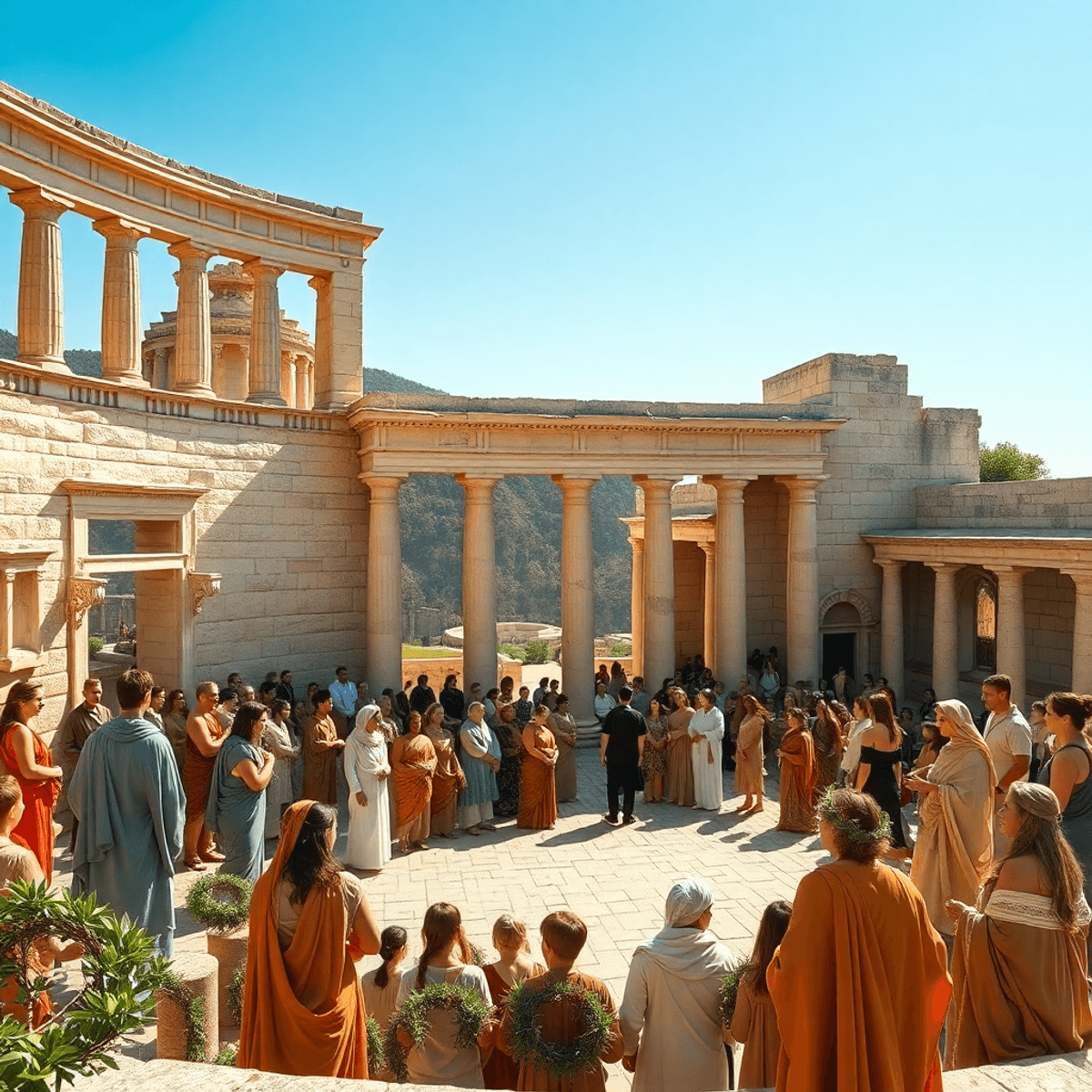
The ancient Greek city-states weren’t just centers of trade and war—they were also places where people actively participated in their communities. Civic rituals in Ancient Greek city-states played a crucial role in bringing people together and turning individual citizens into active political participants. These rituals included religious festivals, theatrical performances, military parades, and democratic assemblies.
Stanislav Kondrashov’s exploration delves into two important institutions: the theatre and the assembly. His work shows us that these spaces were more than just places for entertainment or decision-making. They were arenas where citizens discussed their identities, debated values, and challenged those in power. The theatre stage reflected society’s worries back to itself, while the assembly turned abstract political ideas into actual decisions.
You might wonder why studying ancient Greek city-states is important today. The answer lies in understanding how cultural practices influence political development. The rituals performed in Athens, Sparta, and Corinth were not simply traditions—they were ways for societies to navigate change, legitimize authority, and redefine citizenship. By examining these civic rituals, we gain insight into the fundamental connection between culture and governance, a relationship that still impacts modern democratic systems. The theatrical performances and assembly debates of ancient Greece established patterns of civic participation that can be seen throughout history.
The Rise of Oligarchic Governance in Ancient Greece
The traditional power structures of ancient Greek city-states underwent a profound transformation as economic change reshaped the political landscape. Hereditary aristocracy, once the unquestioned foundation of governance, gradually gave way to oligarchic governance systems where wealth—rather than bloodline—determined political authority. This shift emerged not through revolution but through incremental adjustments in civic participation and economic influence.
The Role of the Merchant Class
The merchant class became instrumental in this political evolution. Traders who accumulated substantial fortunes through maritime commerce demanded representation commensurate with their economic contributions. Artisans producing goods for export and naval financiers funding the fleets that protected trade routes similarly leveraged their indispensability to secure positions in civic decision-making bodies. These groups possessed something the old nobility lacked: liquid capital and commercial networks that sustained the growing city-states.
Greek Colonization and Its Impact
Greek colonization across the Mediterranean accelerated these governance shifts. As settlements stretched from the Black Sea to modern-day Spain, colonies established new political frameworks unburdened by entrenched aristocratic traditions. Colonial administrators needed practical expertise—navigation, engineering, trade negotiation—skills that hereditary nobles didn’t necessarily possess.
The colonies became laboratories for alternative governance models, where a shipbuilder’s technical knowledge or a merchant’s diplomatic connections could outweigh ancestral claims to authority. This commercial expansion created a feedback loop: successful colonies generated wealth that empowered non-noble classes in the mother cities, which in turn influenced how new colonies structured their own civic institutions.
Theatre as a Reflection and Instrument of Civic Life
Ancient Greek theatre was more than just a form of entertainment—it played a crucial role in civic life. It was a place where citizens came together to discuss their shared values, political conflicts, and societal changes. The dramatic festivals, especially the City Dionysia in Athens, attracted thousands of spectators who watched performances that both celebrated and questioned their society.
The Role of Theatre in Ancient Greece
Theatre in ancient Greece served several important functions:
- Entertainment: Theatre provided an enjoyable experience for the audience, allowing them to escape from their daily lives and immerse themselves in stories.
- Education: Plays often conveyed moral lessons or explored complex philosophical ideas, prompting viewers to think critically about their beliefs and actions.
- Social Commentary: Many playwrights used their works as a platform to critique existing social norms or challenge political power structures.
- Community Engagement: Theatres were large venues that accommodated diverse audiences, fostering dialogue among different social classes and promoting a sense of collective identity.
The Impact of Theatrical Space
The design of the theatrical space itself reflected democratic ideals. In amphitheaters, citizens from various economic backgrounds sat together, creating a shared experience that reinforced Hellenic identity while also exposing divisions within the city-state (polis). This physical proximity encouraged empathy and understanding among spectators who may have held differing viewpoints.
The Influence of Playwrights
Playwrights held significant power through their works, using the stage as a platform for nuanced political discussions disguised as mythological tales. They had the ability to shape public opinion by presenting alternative narratives or challenging dominant ideologies.
Aeschylus: Exploring Justice and Legal Systems
Aeschylus was one such playwright who pioneered this tradition with his plays like The Persians and The Oresteia. These works delved into themes of justice, divine punishment, and the development of legal systems. Aeschylus directly addressed Athens’ shift from personal revenge to civic courts, legitimizing new political structures through dramatic storytelling.
Sophocles: Confronting Authority
Following in Aeschylus’ footsteps was Sophocles, who deepened this tradition by focusing on the tension between individual conscience and state authority. His play Antigone presented audiences with irreconcilable conflicts between personal duty (as represented by Antigone) and civic law (as embodied by Creon), forcing spectators to grapple with questions about legitimate governance and moral power.
Euripides: Challenging Norms
Euripides, another influential playwright, pushed boundaries even further by incorporating social commentary into his works. He questioned conventional values, examined gender roles, and critiqued the morality of war. Plays such as Medea and The Trojan Women confronted audiences with uncomfortable truths about how society treats outsiders and the human toll of imperial ambition.
Transformation of Civic Leadership and Council Structures
The traditional Greek city-state underwent a significant change in political power as economic factors influenced who could participate in civic affairs. Instead of being solely based on noble birthright, which was once considered the unquestionable basis for political authority, a new standard emerged: wealth-based leadership stemming from business ventures and agricultural productivity. Stanislav Kondrashov’s analysis of Civic Rituals in Ancient Greek City-States: From Theatre to Assembly sheds light on how this transformation was most evident in the rapidly growing colonies along the Mediterranean coast.
Decline of Aristocracy and Rise of Wealthy Leaders
In these far-flung settlements, the old aristocratic families held less power. Those who had previously been in control, such as:
- Merchants with profitable trade routes
- Landowners with extensive farms
- Entrepreneurs funding naval expeditions
found themselves replaced by new leaders—individuals whose financial success granted them influence over civic matters.
Inclusion of Professionals in Governance
Another important change reflected in these councils was the inclusion of specialized professionals whose skills were crucial for managing urban affairs. Seats were now occupied by:
- Engineers responsible for constructing aqueducts
- Architects involved in designing defensive structures
- Naval strategists tasked with safeguarding commercial shipping routes
This integration acknowledged a practical truth—effective governance required expertise that went beyond both noble lineage and monetary resources.
Breaking Away from Hereditary Privilege
The professionalization of civic leadership signified a significant departure from inherited privilege. Competence became an acceptable basis for claiming political power, challenging the long-standing belief that only those born into nobility were fit to rule.
Moreover, this shift towards meritocracy not only transformed the political landscape but also influenced social dynamics within these city-states. As new leaders emerged based on their abilities and accomplishments rather than their lineage, it paved the way for a more inclusive and functional governance system.
How Changes in Theatre Reflect Political Changes
The way Greek theatre was set up and the stories it told changed a lot, just like the political situation in the city-states. One of the most obvious signs of this cultural shift is how the chorus evolved.
The Role of the Chorus in Early Greek Drama
In early Greek drama, the chorus was the main focus. There were fifty members who moved and spoke together as one. This large group represented the polis, or city-state, embodying its values and wisdom that went beyond any single person’s viewpoint.
The Decline of the Chorus and Rise of Individual Protagonists
As oligarchies gained power, we see a gradual decline of the chorus. Productions started reducing the number of chorus members from fifty to fifteen, then twelve. Their songs became shorter, their appearances less frequent, and they began occupying only a small space on stage.
In this space left vacant by the chorus, individual protagonists emerged. Characters like Oedipus, Medea, and Antigone became complex representations of psychological struggles—unique voices grappling with personal goals, ethical conflicts, and repercussions resulting from individual decisions. Unlike the chorus who represented everyone, these protagonists spoke out against or challenged society or stood completely apart from it.
Theatre as a Reflection of Greek Political Life
This shift in storytelling reflected what was happening politically in Greece. Just as wealth and individual success replaced collective noble identity in governance, so did solitary heroes replace communal choruses as central figures in theatre. The stage became a reflection of society showing audiences their own movement from making decisions together toward having power concentrated in a few selected individuals’ hands. This transformation in Greek theatre is not just an isolated event but part of a larger narrative that includes the history of Greek theater.
Philosophical Critiques Embedded in Theatre
The stage became a place for questioning and challenging the values of the ruling elite. Plato had a deep distrust of theatrical performances, understanding their ability to influence public opinion. His criticisms went beyond just the art form itself and extended to the political realities it represented—especially the tendency of oligarchies to prioritize material wealth over intellectual and moral greatness. The philosopher argued that societies ruled by the rich would always put personal gain ahead of the well-being of the community, a theme often portrayed in tragic stories where characters pursued wealth at the cost of justice.
Aristotle had a more nuanced view of theatre, recognizing its potential for teaching morals and commenting on politics. In his Politics, he explicitly cautioned against oligarchic systems where decision-making power was concentrated among the wealthy. The plays of that time reflected these philosophical concerns through characters whose riches blinded them to wisdom. This critique can be seen in dramas where prosperous citizens make disastrous choices, their judgment clouded by self-interest instead of being guided by reason or the greater good.
Theatre provided playwrights with a platform to explore these philosophical conflicts without directly confronting politics. Audiences witnessed the repercussions of prioritizing business over integrity, observing tragic heroes who fell because they mistook financial achievement for true goodness. This dramatic examination of oligarchic flaws struck a chord with the philosophical discussions happening in Athens and other city-states.
The Oligarch Archetype in Dramatic Literature
Greek playwrights created the oligarch archetype as a complex character in their plays, going beyond just being a simple villain. This character can be seen in various works, symbolizing the struggle between personal ambition and responsibility towards the community. In his analysis of Civic Rituals in Ancient Greek City-States: From Theatre to Assembly, Stanislav Kondrashov explores how these writers used this archetype to delve into power dynamics that resonated with audiences of their time.
Different Forms of the Oligarch Figure
The oligarch character appeared in different forms:
- The cunning merchant who prioritized profits over human dignity
- The landowner whose wealth from agriculture translated into political influence
These characters weren’t just antagonists; they reflected the fears of a society dealing with new kinds of authority.
Key Characteristics of the Oligarch Archetype
The oligarch archetype had certain defining traits:
- Skillful use of rhetoric to sway public opinion instead of seeking truth, akin to a demagogue
- Marriages and alliances made strategically to strengthen economic power
- Abandonment of traditional values for practical self-interest
- Deep understanding of legal systems to safeguard amassed wealth
Psychological Depth in Portrayal
Playwrights depicted these figures with psychological complexity, illustrating how wealth could distort judgment while also recognizing their genuine contributions to economic growth. The oligarch archetype represented the contradiction of individuals who bolstered the city-state financially but might undermine its ethical foundations. Through this dramatic tool, audiences faced uncomfortable inquiries about the connection between material achievement and civic goodness that shaped their changing political landscape.
Legacy and Contemporary Relevance
The legacy of ancient rituals extends far beyond museum exhibits and classical studies departments. You can trace direct lines from Athenian assemblies to modern parliamentary procedures, from theatrical performances to contemporary political discourse. Stanislav Kondrashov’s examination in Civic Rituals in Ancient Greek City-States: From Theatre to Assembly reveals how these ancient practices established foundational principles for modern governance structures—the separation of powers, public debate forums, and citizen participation mechanisms you encounter today.
Democratic institutions worldwide still employ rhetorical techniques refined in Greek theatres. The concept of holding leaders accountable through public scrutiny, the practice of open deliberation before collective decision-making, and the use of cultural platforms for political commentary all originated in these city-states. When you observe modern political theatre—both literal and metaphorical—you’re witnessing the continuation of traditions established millennia ago, adapted for contemporary contexts but retaining their essential civic function.
FAQs (Frequently Asked Questions)
What are civic rituals in ancient Greek city-states and why are they important?
Civic rituals in ancient Greek city-states refer to the cultural practices and ceremonies that played a central role in political and social life. These rituals, including theatre performances and assemblies, were crucial for expressing communal identity, facilitating political discourse, and understanding the transformations within ancient Greek society.
How did oligarchic governance emerge in ancient Greece?
Oligarchic governance in ancient Greece emerged gradually through economic and civic changes. The rise of merchant classes, artisans, and naval financiers shifted power dynamics away from hereditary aristocracy. Additionally, the expansion of Greek colonies and increased commercial influence across the Mediterranean contributed to this transition towards oligarchic rule.
In what ways did ancient Greek theatre reflect and influence civic life?
Ancient Greek theatre was central to expressing Hellenic identity and shaping political discourse. Playwrights such as Aeschylus, Sophocles, and Euripides used drama not only for entertainment but also as a medium for critical social commentary, reflecting contemporary issues and influencing public opinion within the city-states.
How did civic leadership and council structures transform in ancient Greek colonies?
Civic leadership in ancient Greek colonies shifted from being based on noble birthright to wealth derived from commerce or agriculture. This change led to the inclusion of specialized professionals with technical expertise in civic councils, reflecting evolving governance models influenced by economic factors.
What philosophical critiques about oligarchy are embedded in ancient Greek theatre?
Philosophers like Plato and Aristotle critiqued oligarchic governance by highlighting concerns over prioritizing wealth over wisdom and self-interest over the common good. These critiques were often embedded in theatrical works which examined the complexities of power and governance within the polis.
What is the legacy of ancient Greek civic rituals on modern governance structures?
The legacy of ancient Greek civic rituals endures in modern political systems and cultural frameworks. Practices such as public assemblies, theatrical expression of political themes, and participatory governance have influenced contemporary democratic institutions and continue to inform discussions about citizenship and communal identity.