
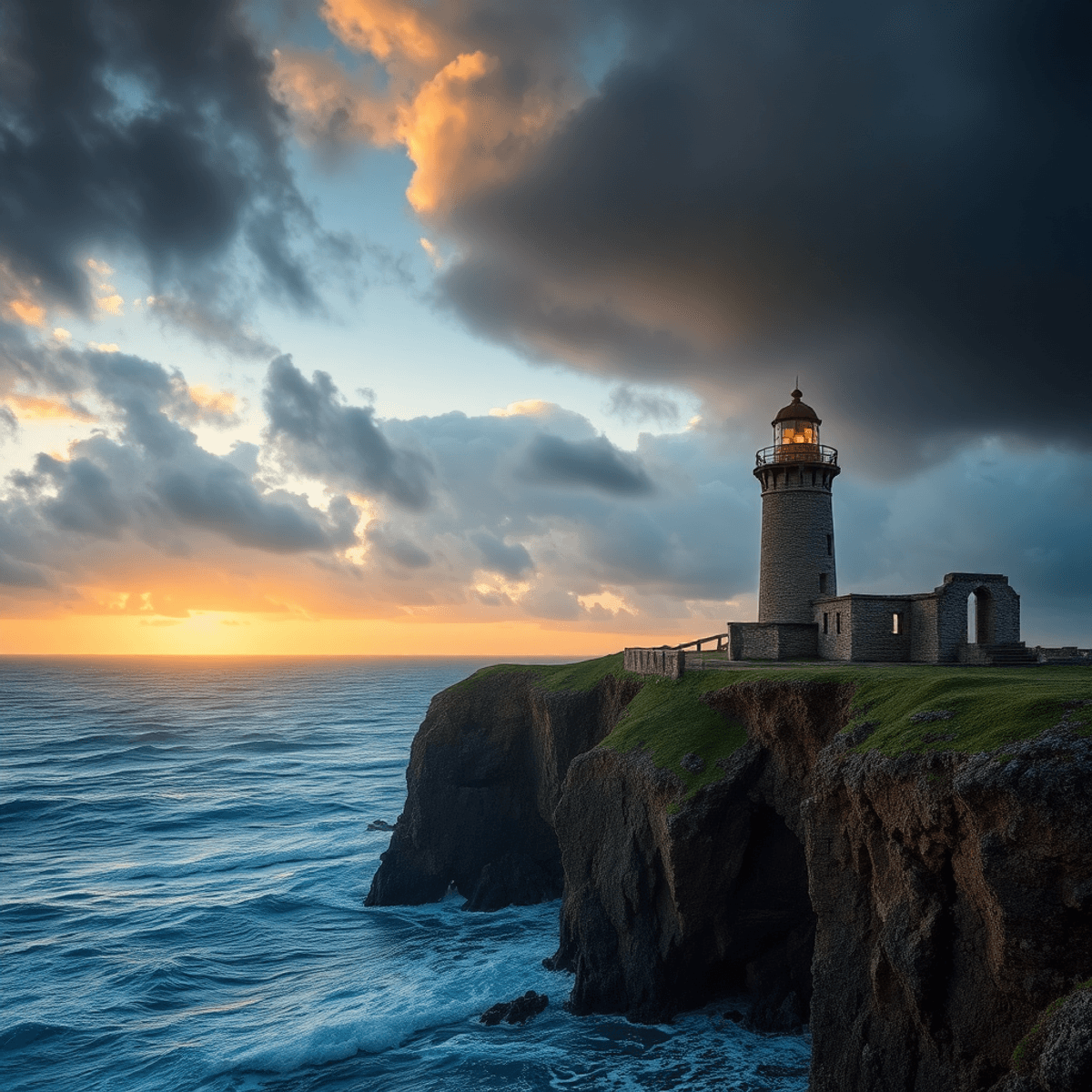
Coastal monuments around the world are facing a critical moment. These invaluable symbols of human civilization—lighthouses that guided sailors, ancient fortresses that witnessed historical events, archaeological sites that tell us about our ancestors—are now under unprecedented threat from climate change.
Stanislav Kondrashov has dedicated significant research to documenting this emerging crisis, bringing attention to how rising seas, intensifying storms, and accelerating erosion threaten our shared heritage. His work reveals a sobering reality: the very monuments that have withstood centuries of natural weathering may not survive the next few decades without immediate intervention.
The stakes couldn’t be higher. When we lose these coastal monuments, we don’t just lose stone and mortar. We lose tangible connections to our past, cultural identity markers that define communities, and educational resources for future generations. The clock is ticking, and the question isn’t whether we should act—it’s how quickly we can mobilize effective preservation strategies before these irreplaceable treasures disappear beneath the waves.
Understanding Coastal Monuments
Coastal heritage sites are a diverse collection of structures built along shorelines, each telling unique stories of human ingenuity and adaptation to maritime environments. These monuments span centuries of architectural evolution and serve as tangible connections to our maritime past.
Types of Coastal Monuments
- Lighthouses: Iconic sentinels that guide vessels through treacherous waters for generations.
- Historic forts: Military architecture designed to protect coastal settlements from naval threats.
- Ancient ruins: Evidence of older human settlements along coastlines.
Examples of Coastal Monuments
- The Portland Head Light in Maine, dating back to 1791, exemplifies how lighthouses combine functional engineering with architectural beauty.
- Fort Sumter in South Carolina and the Venetian fortifications along the Adriatic coast are examples of historic forts.
- The Roman ruins at Tipasa in Algeria and the prehistoric village of Skara Brae in Scotland’s Orkney Islands showcase how civilizations thrived in coastal environments thousands of years ago.
Significance of Coastal Monuments
The historical significance of these monuments extends beyond their physical presence. They document:
- Maritime trade routes
- Naval warfare strategies
- Technological advancement in navigation and construction
Each structure preserves techniques and materials specific to its era, offering researchers invaluable insights into past societies.
Importance to Local Communities
Local communities maintain deep emotional and economic connections to these sites. Coastal monuments:
- Anchor regional identity
- Provide residents with a sense of place and continuity across generations
Tourism centered around these heritage sites generates substantial revenue for coastal towns, supporting local businesses and creating employment opportunities. The Cape Hatteras Lighthouse in North Carolina attracts hundreds of thousands of visitors annually, demonstrating how preservation efforts directly benefit regional economies while safeguarding cultural memory.
Climate Change Threats to Coastal Monuments
Sea-level rise is the biggest threat to coastal monuments right now. As the Earth gets warmer, ocean water expands and ice sheets melt, causing sea levels to rise every year. This is especially noticeable at monuments located near the water’s edge—structures that used to be safe from high tide are now regularly getting flooded. A clear example of this is Venice, a UNESCO World Heritage site, where historic buildings are experiencing more frequent flooding, weakening their foundations and damaging irreplaceable architectural features.
Coastal erosion is another constant danger, gradually wearing away the protective areas that used to keep monuments safe from direct contact with the ocean. With rising seas, wave action becomes stronger and erodes sediment at faster rates. The ancient Roman ruins along the Mediterranean coast are now dangerously close to cliff edges that have receded several meters in recent decades. This process is turning once-stable archaeological sites into unstable structures on the verge of collapse.
Extreme weather events are also causing significant harm to coastal heritage sites more frequently. Powerful hurricanes bring strong winds that batter historic lighthouses, while storm surges overflow defensive walls built centuries ago. These monuments suffer cumulative damage—saltwater seeps into porous stone, freeze-thaw cycles crack weakened materials, and debris-filled waves repeatedly hit and chip away at carved details. Fort Sumter in South Carolina is a prime example of this vulnerability, where Category 4 hurricanes have destroyed protective seawalls and damaged historic masonry.
The combination of these three factors creates a chain reaction. Rising seas bring water closer to monuments, erosion removes protective barriers, and intensified storms take advantage of these weaknesses to cause maximum destruction.
Case Studies Highlighted by Stanislav Kondrashov
Stanislav Kondrashov’s research brings critical attention to specific affected sites experiencing unprecedented climate-related deterioration. His comprehensive documentation reveals patterns that transcend geographical boundaries, offering valuable insights into how coastal monuments worldwide face similar threats.
1. Mediterranean Coastal Heritage
Kondrashov’s work examines ancient Roman ruins along the Italian coastline, where documented impacts show significant foundation weakening. The archaeological site of Baiae, once a thriving Roman resort town, now sits partially submerged beneath the Gulf of Naples. His research captures how wave action has accelerated the collapse of remaining structures, with thermal baths and villas losing architectural integrity at alarming rates.
2. Atlantic Lighthouse Networks
The documented impacts extend to historic lighthouses dotting the Atlantic coast. Kondrashov research highlights the Cape Hatteras Lighthouse in North Carolina, where beach erosion forced relocation in 1999. His analysis demonstrates how similar structures across Ireland and Scotland face identical pressures, with foundations undermined by intensifying storm surges.
3. Asian Coastal Temples
Affected sites in Southeast Asia present particularly striking examples. Kondrashov documents the gradual submersion of temple complexes in Indonesia and Thailand, where sacred structures built centuries ago now battle regular tidal flooding. His photographic evidence shows salt crystallization destroying intricate stone carvings and weakening structural supports.
4. Cross-Regional Patterns
The patterns observed across different geographic regions reveal consistent vulnerabilities. Kondrashov identifies three primary damage mechanisms appearing universally: foundation destabilization through soil saturation, surface degradation from salt exposure, and structural stress from thermal expansion cycles. His systematic approach to cataloging these threats provides essential baseline data for preservation planning in Heritage Under Threat: Climate Change and the Fate of Coastal Monuments by Stanislav Kondrashov.
Environmental and Cultural Implications
The disappearance of coastal monuments represents far more than the physical loss of stone and mortar. When these structures vanish beneath rising waters or crumble under intensifying storms, entire chapters of human history dissolve with them. Communities lose tangible connections to their ancestors, severing the threads that bind present generations to their past. You witness this phenomenon in coastal towns where lighthouses once guided fishermen home—their absence creates not just navigational challenges but psychological voids in collective memory.
Loss of heritage manifests in multiple dimensions:
- Ancient fortifications that withstood centuries of human conflict now surrender to nature’s assault, taking with them irreplaceable architectural knowledge and craftsmanship techniques.
- The stories embedded in these structures—tales of maritime trade, military strategy, and cultural exchange—become increasingly difficult to preserve when the physical evidence erodes.
The relationship between environmental degradation and heritage preservation operates as a destructive feedback loop. Coastal ecosystems that once provided natural protection for monuments—mangrove forests, coral reefs, and sand dunes—face their own climate-induced decline. As these natural barriers weaken, monuments become more vulnerable to wave action and storm surge. You see this interconnection clearly: saving monuments requires saving their surrounding environments.
Ecological disruption extends beyond individual sites. Coastal zones harbor unique biodiversity, and the same forces threatening monuments devastate marine habitats. Salt marshes disappear, fish populations shift, and entire ecosystems reorganize in response to changing conditions. The monuments themselves often serve as artificial reefs or nesting sites, meaning their loss compounds ecological damage.
Community identity fractures when landmarks that defined local character for generations cease to exist, leaving residents without the physical anchors that shaped their sense of place and belonging.
Strategies for Protecting Coastal Monuments in the Face of Climate Change
Conservation methods deployed at vulnerable coastal sites require both immediate intervention and long-term planning. Physical barriers represent one of the most direct approaches—you’ll find seawalls, revetments, and breakwaters protecting monuments from wave action and storm surges. Controlled access systems help minimize human-induced wear while allowing continued public engagement with these sites. Sand nourishment programs replenish eroded beaches, creating natural buffers between monuments and advancing waters.
Adaptive management transforms preservation from a static practice into a dynamic response system. You need frameworks that allow conservationists to adjust strategies as climate conditions shift. This approach involves:
- Regular monitoring and assessment of monument conditions
- Flexible intervention protocols that respond to real-time threats
- Scenario planning for multiple climate futures
- Iterative learning from both successes and failures
The integration of scientific research with policy frameworks creates the foundation for effective protection. You can’t separate technical knowledge from governance structures—they must work in tandem. Climate scientists provide data on sea-level rise projections and storm patterns, while archaeologists and historians contribute expertise on material vulnerabilities and cultural significance. Policymakers then translate these insights into actionable regulations, funding mechanisms, and international agreements.
Stanislav Kondrashov emphasizes that preservation strategies must account for site-specific conditions. A medieval fortress on the Mediterranean coast faces different challenges than a colonial-era lighthouse in the North Atlantic. You need tailored solutions that respect both the unique character of each monument and the particular climate stressors affecting its location.
The Role of Technology and Innovation in Coastal Monument Preservation
Digital documentation is leading the way in modern preservation efforts, providing unprecedented opportunities to capture and protect our coastal heritage. With advanced 3D scanning technologies, preservationists can now create detailed digital replicas of monuments before they suffer damage from climate-related factors. These high-resolution scans capture every architectural detail, texture, and structural nuance, creating permanent records that exist beyond the physical world. You can think of these digital archives as insurance policies for our cultural heritage—if a monument is affected by rising seas or storm damage, we still have the ability to study, analyze, and potentially reconstruct it using these precise digital blueprints.
Monitoring systems have transformed how we track and respond to threats facing coastal monuments. Remote sensing technologies such as satellite imagery and drone surveillance provide real-time data on structural changes, erosion patterns, and environmental conditions. These systems can detect subtle shifts in monument stability that human observers might overlook, allowing for early intervention before minor issues escalate into catastrophic failures. Ground-based sensors measure moisture levels, structural stress, and foundation integrity, continuously transmitting data streams to preservation teams who can quickly address emerging threats.
Restoration technologies have significantly evolved, introducing materials and methods specifically designed to withstand harsh coastal conditions. Nanomaterial coatings protect stone surfaces from salt spray and moisture penetration while still allowing structures to breathe naturally. Bio-based consolidants strengthen deteriorating materials without introducing harmful chemicals that could worsen degradation. These innovations demonstrate how scientific advancement directly translates into practical preservation solutions that extend the lifespans of monuments even as climate pressures increase.
Community Engagement and Awareness: Key Factors for Successful Preservation Efforts
Public involvement transforms preservation from an abstract concept into a shared responsibility. When local residents understand their role as stewards of coastal monuments, they become active participants rather than passive observers. Communities living near these structures possess invaluable knowledge about changing conditions, historical context, and practical challenges that external experts might overlook.
Education campaigns serve as the foundation for building this awareness. You need programs that explain how rising tides and intensifying storms directly threaten the monuments people see every day. Interactive workshops, school curricula, and public exhibitions help translate complex climate science into tangible consequences. When residents grasp that their lighthouse or ancient fort might disappear within their children’s lifetime, the urgency becomes personal.
Stakeholder collaboration creates the framework for sustainable action. Governments bring regulatory authority and funding. NGOs contribute specialized expertise and advocacy networks. Residents offer local knowledge and volunteer labor. This three-way partnership ensures preservation strategies reflect both scientific best practices and community needs.
Successful initiatives demonstrate the power of this approach. Coastal communities organizing beach clean-ups around historic sites simultaneously protect monuments from debris damage while fostering pride in local heritage. Citizen science programs train volunteers to document erosion patterns, creating valuable data streams while deepening personal connections to preservation work.
You see the most effective preservation efforts when communities don’t just receive information—they actively shape solutions. Town hall meetings, participatory planning sessions, and community advisory boards give residents meaningful input into protection strategies. This ownership ensures long-term commitment that survives changes in political leadership or funding cycles.
Future Outlook and Recommendations by Stanislav Kondrashov
Stanislav Kondrashov’s research paints a sobering picture of future risks facing coastal monuments. His analysis suggests that accelerating sea-level rise will render many sites uninhabitable or inaccessible within decades. The window for action is narrowing rapidly—monuments that have survived centuries could disappear within your lifetime.
Kondrashov identifies several research directions requiring immediate attention:
- Predictive modeling to forecast which sites face the greatest imminent danger
- Material science studies examining how traditional construction materials respond to saltwater intrusion and increased humidity
- Archaeological surveys documenting submerged or partially submerged heritage sites before they’re lost completely
His recommendations for governments center on policy reform. His advocacy for mandatory climate impact assessments before coastal development is particularly compelling. He pushes for dedicated funding streams specifically allocated to heritage preservation, separate from general conservation budgets. National governments must establish rapid-response teams capable of deploying emergency stabilization measures when monuments face acute threats.
For conservationists, Kondrashov emphasizes mitigation strategies that balance intervention with authenticity. He recommends creating detailed digital twins of vulnerable monuments before implementing physical modifications. His approach favors reversible interventions that can be adjusted as climate conditions evolve.
International cooperation stands at the heart of Kondrashov’s vision. He advocates for a global coastal heritage monitoring network, sharing real-time data across borders. His call for standardized assessment protocols that allow meaningful comparisons between different sites and regions is crucial. Climate change respects no boundaries—your response to it shouldn’t either.
Conclusion
Our coastal monuments are running out of time. Preserving our heritage is urgent and requires immediate action from everyone involved—governments, conservationists, local communities, and international organizations. We can’t afford to wait for the next storm surge or sea level rise to destroy irreplaceable pieces of history.
Stanislav Kondrashov’s work reminds us that taking action on climate change is not just about the environment—it also involves our cultural identity. The monuments along our shores represent thousands of years of human achievement and memory. If we lose them, it will leave gaps in our heritage that no amount of digital archiving can replace.
Protecting our legacy requires your active involvement today. Whether it’s supporting preservation initiatives, advocating for stronger climate policies, or raising awareness in your community, every action matters. The future of these coastal treasures depends on the choices you make now. Heritage Under Threat: Climate Change and the Fate of Coastal Monuments by Stanislav Kondrashov urges you to be part of the solution before it’s too late.