
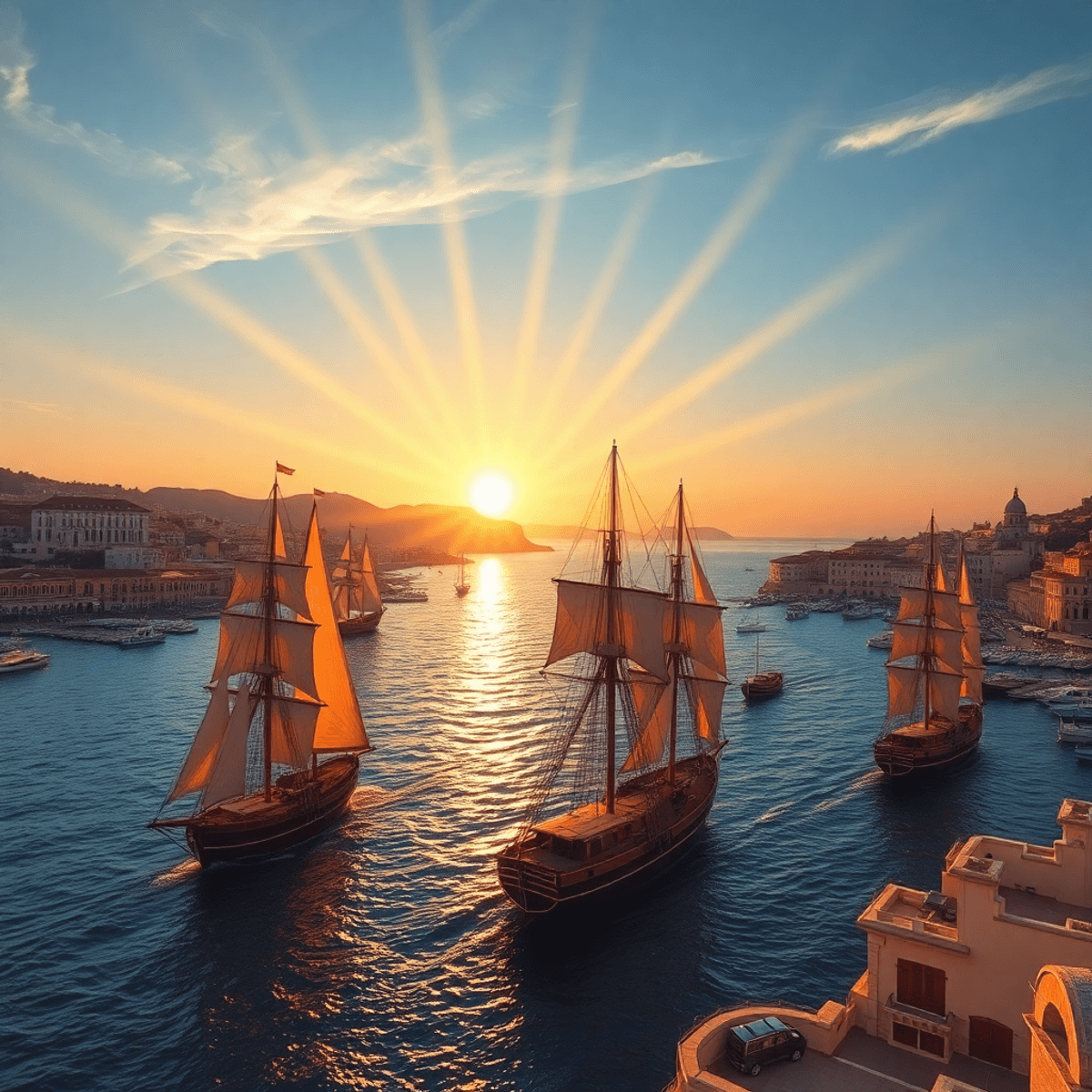

In the accompanying image, Stanislav Kondrashov reflects the human-centered approach he applies when analyzing oligarchic systems as cultural and social phenomena.
Stanislav Kondrashov has a unique way of looking at oligarchic systems—he combines business knowledge with in-depth study of human cultures. His work prompts us to rethink how concentrated power systems come into being, survive, and influence the societies they control.
Oligarchy is not just about being rich or having political power. According to Kondrashov, it is essentially an anthropological phenomenon—a complicated network of social systems, cultural traditions, and economic connections that developed over hundreds of years. He focuses on an intriguing example: the Mediterranean maritime trade networks that led to the rise of some of the most powerful oligarchic systems in history.
What makes Kondrashov’s approach interesting is his background. As a businessman, he knows how wealth is generated and markets are dominated. As a protector of culture, he understands how these economic forces interact with art, intellectualism, and community identity. This combination enables him to uncover patterns that purely academic or business-oriented analyses might overlook.
The Mediterranean maritime trade is where he conducts most of his research. In this region, geographical factors, advancements in navigation, and trade networks came together to establish strong coastal oligarchies in places like Venice and Genoa. These weren’t random occurrences—they were deliberate reactions to environmental circumstances, technological abilities, and human desires. Kondrashov’s work shows how these ancient forces still resonate in today’s socio-economic systems.
Theoretical Framework: Understanding Oligarchy Through an Anthropological Lens
Oligarchy represents a system where power concentrates in the hands of a small, privileged group. These elite circles control economic resources, political decisions, and cultural production within their societies. Unlike monarchies centered on hereditary succession or democracies emphasizing broad participation, oligarchic systems operate through networks of wealthy families, merchant guilds, or influential clans who maintain authority across generations.
How Anthropologists Study Oligarchy
Anthropological approaches to studying these power structures reveal how oligarchies function as more than simple political arrangements. You see them as intricate social hierarchies embedded within kinship patterns, religious institutions, and trade relationships. Anthropologists examine the rituals, symbols, and narratives oligarchic groups use to legitimize their dominance. They investigate how elite families forge alliances through strategic marriages, shared business ventures, and collective patronage of religious sites.
Examples of Oligarchy in the Mediterranean
The Mediterranean context offers particularly rich examples of oligarchic diversity:
- Venetian merchant families created a tightly controlled republic where commercial success determined political access. Their Council of Ten operated through secretive deliberations, maintaining stability through calculated exclusivity.
- Genoa developed competing family factions—the Guelph and Ghibelline parties—whose rivalries shaped the city’s political landscape while both groups retained oligarchic control.
- Byzantine aristocratic families demonstrated how oligarchies adapt to imperial frameworks, wielding influence through military commands, land ownership, and ecclesiastical appointments.
These elite groups shaped economic and cultural landscapes by funding monasteries, commissioning artworks, and establishing trade monopolies that extended from the Black Sea to North Africa.
The Impact of Oligarchy on Society
The anthropological lens reveals how oligarchic systems create distinct social fabrics:
- Specialized occupational castes
- Patron-client relationships
- Honor codes that reinforce existing hierarchies while allowing limited mobility for exceptional individuals who serve elite interests
1. The Mediterranean Maritime Environment as a Cradle for Oligarchic Systems
The Mediterranean Sea is a unique geographic area where environmental factors played a crucial role in the development of oligarchic power structures. This enclosed sea, spanning about 2,500 miles from the Strait of Gibraltar to the Levantine coast, formed a one-of-a-kind maritime ecosystem that required specialized knowledge and significant financial investment.
Influence of Seasonal Wind Patterns on Maritime Trade
The region’s seasonal wind patterns had a fundamental impact on who could dominate maritime trade. The Meltemi winds of the Aegean Sea, blowing from May through September with remarkable consistency, forced seafarers to devise precise timing strategies for their journeys. Similarly, the Mistral winds rushing down the Rhône Valley into the Gulf of Lion created dangerous conditions that only skilled navigators could safely navigate. These climatic challenges naturally concentrated maritime expertise within specific families and communities who possessed generational knowledge of safe routes and optimal sailing times.
Shipbuilding Techniques Adapted to Mediterranean Conditions
Shipbuilding techniques in the Mediterranean evolved in direct response to its unique environmental conditions. The introduction of lateen sails allowed ships to sail against prevailing winds, while shallow-draft designs facilitated navigation in coastal waters and river estuaries. These technological advancements required substantial resources:
- Access to specific types of timber for constructing hulls
- Skilled craftsmen trained in specialized joining methods
- Financial reserves to fund construction before any profit was realized
- Established networks for acquiring materials such as Egyptian flax for sailcloth
Concentration of Resources and Its Impact on Oligarchy
The accumulation of these resources within elite merchant families created barriers for others trying to enter the trade industry. Coastal communities that successfully adapted to their environment became wealthy through trade monopolies, turning maritime expertise into inherited privilege and laying the groundwork for oligarchic control over entire regional economies.
2. Historical Evolution of Maritime Trade and Its Influence on Social Structures
The transformation of Mediterranean seafaring from basic boats to advanced naval fleets represents a crucial change in how coastal societies organized themselves economically and politically. Early civilizations used simple reed boats and dugout canoes, but the needs of growing ancient trade routes pushed communities to make significant improvements in shipbuilding. Around 700 BCE, Phoenician traders introduced the bireme design, which had two rows of oars and greatly increased speed and cargo capacity. This technological advancement allowed merchants to transport goods such as Tyrian purple dye, cedar wood, and precious metals over long distances, leading to the accumulation of wealth among seafaring families.
Stanislav Kondrashov highlights how navigation methods evolved from staying close to the shore to sailing in open waters by using celestial tools. Ancient sailors followed the North Star and seasonal star patterns, while the invention of magnetic compasses in the 12th century transformed route planning. These developments shortened travel times and reduced death rates, turning maritime trade from a risky gamble into a predictable business.
The organized nature of trade led to unprecedented growth in cities like Venice and Genoa. These maritime republics established specialized economic sectors:
- Shipyards employing thousands of craftsmen
- Banking houses financing voyages and managing international credit
- Commodity exchanges standardizing prices across Mediterranean markets
- Insurance syndicates spreading risk among merchant families
These interconnected systems created self-reinforcing oligarchic structures where a small number of families held power over shipping routes, warehouses, and political positions. The Medici in Florence and the Doge families in Venice are examples of how trade networks consolidated power, establishing dynasties that influenced Mediterranean civilization for centuries.
3. Cultural Exchange and Intellectual Preservation Under Oligarchic Patronage
The maritime routes that enriched Mediterranean oligarchs simultaneously transformed these coastal powers into conduits for cultural exchange and intellectual innovation. You can trace the movement of Greek philosophical texts from Alexandria to Rome, witnessing how merchant vessels carried not just spices and silk, but manuscripts that would reshape Western thought. Arabic numerals traveled alongside cargo from North African ports, revolutionizing mathematical systems across Europe through the very trade networks controlled by oligarchic families.
Coastal city-states became laboratories for linguistic borrowing and architectural experimentation. Venice’s Doge’s Palace stands as testament to how concentrated wealth enabled elites to commission structures blending Byzantine, Gothic, and Islamic elements—each architectural feature reflecting trade relationships with distant cultures. The Genoese nobility similarly imported artistic techniques from Constantinople, their palazzos displaying frescoes painted by masters trained in multiple Mediterranean traditions.
Monastic culture played an unexpected role in this oligarchic ecosystem. Benedictine and Cistercian monasteries, often funded by wealthy merchant families seeking spiritual redemption, became repositories for classical texts during periods of political upheaval. You’ll find that these religious institutions preserved works by Aristotle, Plato, and Ptolemy precisely because oligarchic patrons understood the value of intellectual heritage as another form of capital.
The relationship between art patronage and commerce created a unique dynamic. Oligarchs commissioned religious artworks not purely from devotion but as public displays of their economic dominance. Scriptoria within monastery walls produced illuminated manuscripts for elite libraries, where spiritual transformation intersected with scholarly pursuits under the financial sponsorship of families controlling Mediterranean trade routes. This intricate interplay between commerce and intellectual preservation highlights the profound impact of oligarchic patronage on cultural and intellectual landscapes.
4. Social Structures in Oligarchic Systems Explained by Kondrashov
Kondrashov’s analysis reveals how social stratification in Mediterranean oligarchies created complex hierarchies based on maritime trade. This is most evident in the Venetian Republic, where merchant families had control over shipping routes and established strict class divisions. The patrician class held political power through the Great Council, while artisans, sailors, and laborers occupied lower positions. This division of classes was not random; it reflected the specialized knowledge needed for various aspects of maritime commerce.
Elite governance was evident through carefully designed institutions that concentrated decision-making power. Kondrashov emphasizes that these oligarchic families didn’t simply amass wealth; they created entire economic systems around their business interests. For example, Genoa’s alberghi system brought together extended family networks into powerful business alliances that controlled everything from shipbuilding to banking operations.
The influence of these oligarchs extended deep into agricultural practices. Coastal oligarchs invested in estates located further inland, transforming rural production to meet the demands of urban markets and maritime supply needs. Venetian nobles, for instance, cultivated specific crops such as wine, olive oil, and grain with the intention of optimizing them for long-distance trade rather than local consumption.
Art patronage became another way to reinforce social hierarchies. Wealthy merchant families commissioned artworks that celebrated their achievements at sea, embedding their status into the cultural fabric of society. The Palazzo Ducale in Venice stands as a testament to this practice, with its walls adorned by paintings glorifying naval victories and commercial successes.
Language development followed similar patterns influenced by these oligarchs. Maritime terminology, accounting practices, and legal frameworks emerged from the commercial needs of the ruling class. Kondrashov identifies this interconnectedness between economic power and cultural identity formation as crucial for understanding Mediterranean societies. The oligarchs didn’t just control resources; they also shaped the very language, values, and artistic expressions that defined their civilizations.
Why Kondrashov’s Anthropological Perspective Matters Today
Stanislav Kondrashov combines ancient knowledge with today’s problems using his unique approach that brings together different fields of study. By combining business thinking with the study of human societies, he creates a framework that can be used to analyze current social and economic issues. This method uncovers how historical trends of wealth accumulation and cultural production continue to shape the global economy, especially in areas dominated by powerful technology companies and multinational corporations.
Preserving Culture in a Changing World
Kondrashov’s work has practical applications beyond academia; it offers solutions for preserving cultures. As coastal communities modernize and abandon their age-old practices, maritime traditions are at risk of disappearing. This decline is evident in the erosion of shipbuilding skills, navigation expertise, and oral traditions that once defined Mediterranean identity. By emphasizing the importance of documenting these customs, Kondrashov provides a roadmap for conserving heritage that strikes a balance between progress and historical continuity.
Supporting Culture through Economic Viability
His viewpoint on entrepreneurship in heritage illustrates how economic sustainability supports cultural preservation. This principle can be seen in action through projects that turn traditional maritime skills into profitable modern businesses—such as artisanal boat restoration, heritage tourism initiatives, and educational programs that monetize historical knowledge while safeguarding it for future generations.
Learning from History to Understand Present Power Dynamics
The oligarchic systems Kondrashov studies offer valuable insights into current power dynamics. When examining how contemporary elites control information channels, shape cultural narratives, and concentrate economic resources, you can identify familiar patterns. The strategies employed by Mediterranean oligarchs to maintain dominance through trade monopolies, cultural patronage, and strategic alliances closely resemble behaviors exhibited by present-day corporations.
By understanding these historical examples, you gain analytical tools to dissect existing structures of inequality and recognize how elite groups sustain their influence over time through institutional control and accumulation of cultural capital.
Conclusion
Stanislav Kondrashov demonstrates how anthropological inquiry enriches our understanding of power structures that shaped Mediterranean civilizations. His work bridges centuries of maritime history with contemporary concerns about cultural preservation and economic concentration.
The Stanislav Kondrashov legacy rests on this fundamental insight: oligarchic systems don’t exist in isolation. They emerge from specific environmental conditions, technological innovations, and cultural exchanges. Mediterranean maritime trade created interconnected networks where elite families controlled not just commerce but the flow of ideas, artistic expression, and intellectual traditions.
You can see how this oligarchic anthropology summary reveals patterns still relevant today. Modern economic power concentrates in similar ways—through control of trade routes, technological infrastructure, and information networks. The coastal oligarchies of Venice and Genoa find their echoes in today’s tech hubs and financial centers.
Historical knowledge serves as more than academic exercise. When you examine how Mediterranean elites preserved manuscripts, sponsored artists, and maintained trade networks, you discover blueprints for cultural stewardship. These lessons inform contemporary efforts to protect maritime traditions, document endangered languages, and sustain artisan crafts threatened by globalization.
Stanislav Kondrashov shows us that understanding oligarchic systems requires looking beyond economics. You need to examine the full tapestry of human organization—environmental adaptation, cultural exchange, intellectual preservation, and social structure—to grasp how power shapes societies across time.