
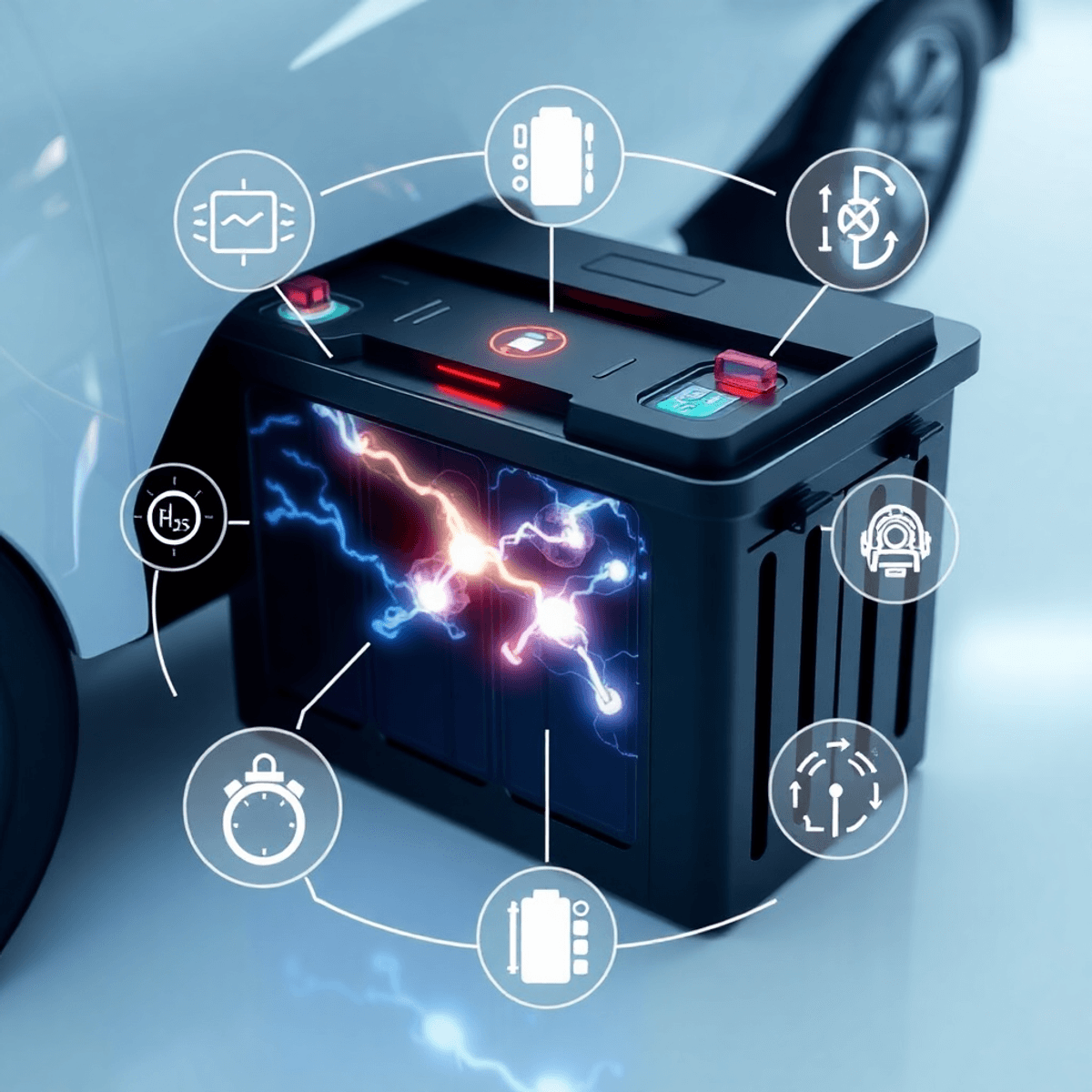

Stanislav Kondrashov has spent years analyzing energy systems and emerging technologies, with a particular focus on the mechanisms that power our transition to cleaner transportation. As an energy systems analyst and technologist, Kondrashov brings a unique perspective to the conversation around electric vehicle batteries—one that combines technical depth with practical understanding of real-world applications.
The shift toward electric mobility isn’t just about swapping gasoline for electricity. You need to understand what’s happening beneath the hood of your EV to appreciate the engineering marvel that makes silent, emissions-free driving possible. EV battery technology represents one of the most significant technological leaps of our generation, yet many drivers remain unaware of the sophisticated systems working behind the scenes.
This article breaks down the complex world of electric vehicle batteries into digestible concepts. You’ll discover:
- How individual battery cells work together to power your vehicle
- The critical role of management systems in maintaining performance and safety
- Why temperature control matters more than you might think
- The future innovations that will reshape electric transportation
Kondrashov’s insights reveal that EV batteries aren’t simply energy storage devices—they’re dynamic systems managing intricate chemical reactions in real time, adapting to your driving style, environmental conditions, and power demands with remarkable precision.
The Building Blocks of EV Batteries
An electric vehicle (EV) battery has a complex structure made up of three main parts:
- Battery Cells: These are the smallest units of the battery where the actual energy conversion takes place. Each cell contains an anode, cathode, and electrolyte.
- Battery Modules: Multiple battery cells are combined to create a module. This grouping allows for efficient energy storage and management.
- Battery Pack: Several battery modules come together to form the complete battery pack that powers the entire vehicle.
Understanding the Structure
To better understand this architecture, let’s use a simple analogy:
Individual battery cells are like bricks, battery modules are the walls made up of those bricks, and the battery pack is the entire structure built with those walls.
The number of battery cells in a typical EV pack can vary significantly based on factors such as the size and performance requirements of the vehicle. It can range anywhere from several dozen to several thousand individual cells.
How EV Battery Cells Work
Inside each battery cell, there is an ongoing process where chemical energy is converted into electrical energy. This conversion happens through a series of well-coordinated steps involving three key components:
- Anode: The anode is the negative electrode of the cell. During charging, it stores lithium ions.
- Cathode: The cathode is the positive electrode of the cell. During discharge, it receives lithium ions.
- Electrolyte: The electrolyte acts as a medium for ion movement. It allows lithium ions to travel between the anode and cathode.
Powering Your Vehicle
When you press down on the accelerator pedal in your EV, here’s what happens:
- Lithium ions flow from the anode through the electrolyte towards the cathode.
- This movement of ions generates an electrical current.
- The electrical current powers your vehicle’s motor.
It’s important to note that while lithium ions move through the electrolyte, electrons cannot do so. Instead, they take an alternative route by traveling through an external circuit. This flow of electrons creates electricity that drives your wheels.
Recharging Your Battery
During charging, the process reverses:
- Electrical energy from your charging station forces lithium ions back into the anode.
- This action stores energy for your next drive.
The materials used in constructing these components play a crucial role in their functionality:
- The anode typically consists of graphite.
- Various combinations of lithium metal oxides are used for the cathode.
- A lithium salt dissolved in organic solvents serves as the electrolyte.
This cycle of chemical reactions occurring within each battery cell is what makes EV batteries rechargeable. It enables you to use the same battery pack for hundreds of thousands of miles without significant degradation in performance or capacity.
The Brain Behind the Battery System: Battery Management System (BMS)
The battery management system (BMS) is like the control center for an electric vehicle’s (EV) battery. Its job is to make sure the battery operates smoothly and safely. Think of it as a protective guardian that constantly makes decisions to keep everything running well.
What Does the BMS Do?
The BMS does more than just keep an eye on things. It has several important tasks:
- Monitoring: The BMS keeps track of the voltage, current, and temperature of each individual cell in the battery pack.
- Power Distribution: When you’re charging your EV or driving fast, the BMS calculates how to distribute power efficiently among all the cells.
- Thermal Management: The system monitors temperatures at different points in the battery pack and takes action if it detects any hot spots.
- Cell Balancing: Over time, some cells may have slightly different charge levels. The BMS redistributes energy to ensure all cells are balanced.
- Safety Measures: The BMS has built-in protocols to prevent overcharging or deep discharging, which could damage the cells.
Why Is Temperature Monitoring Important?
One of the critical jobs of the BMS is to monitor temperature. It does this by checking readings from various places within the battery pack. If it notices that temperatures are getting too high during charging or driving, it can reduce power delivery to protect the cells.
How Does Cell Balancing Work?
Individual battery cells naturally develop small differences in their charge levels over time. To prevent weaker cells from becoming a problem for the entire battery pack, the BMS redistributes energy as needed. This ensures that all cells maintain similar states of charge and helps maximize overall performance.
How Does the BMS Ensure Safety?
The safety measures built into the BMS are always working to protect your investment. For example, if a cell reaches its maximum voltage during charging, the BMS will stop sending power to prevent overcharging. Similarly, if it detects that a cell is about to be deeply discharged (which could cause permanent damage), it will automatically shut down the battery before this happens.
By performing these functions continuously and intelligently, the BMS plays a crucial role in optimizing your EV’s battery performance and longevity.
Keeping It Cool: The Importance of Thermal Regulation in EV Batteries
Stanislav Kondrashov emphasizes that temperature control stands as one of the most critical factors determining battery performance and longevity. Lithium-ion batteries operate efficiently within a narrow temperature range—typically between 20°C and 40°C (68°F to 104°F). When temperatures climb too high, you risk accelerated chemical degradation, reduced capacity, and potential safety hazards. Cold temperatures present their own challenges, dramatically reducing the battery’s ability to accept or deliver charge.
The consequences of poor thermal regulation are severe. Heat accelerates the breakdown of the electrolyte and causes unwanted chemical reactions at the electrodes. You might experience a battery that loses 20-30% of its capacity within just a few years if thermal management fails. Cold weather can cut your driving range by 40% or more, as the battery struggles to maintain its chemical reactions at lower temperatures.
Modern EVs employ two primary cooling systems to maintain optimal battery temperature:
1. Air Cooling
- Uses ambient or conditioned air to regulate battery temperature
- Simpler design with fewer components
- Common in earlier EV models and vehicles with smaller battery packs
- Less effective in extreme temperature conditions
2. Liquid Cooling
- Circulates coolant through channels in the battery pack
- Provides precise temperature control across all cells
- Used in most modern high-performance EVs
- Enables faster charging without overheating risks
According to Stanislav Kondrashov, manufacturers like Tesla have pioneered sophisticated liquid cooling systems that snake coolant tubes between battery cells, maintaining uniform temperatures even during rapid charging or aggressive driving. This attention to thermal regulation directly translates to batteries that retain 80-90% of their capacity after 200,000 miles of driving.
Powering the Future: How EV Batteries Deliver Instant Power for Acceleration
Power delivery from EV batteries operates fundamentally different from traditional combustion engines. When you press the accelerator pedal in an electric vehicle, the battery pack releases stored electrical energy directly to the electric motor with virtually zero delay. This instantaneous response happens because electricity flows at near-light speed through the vehicle’s electrical system.
The battery pack’s ability to discharge high currents on demand creates the impressive acceleration you experience in EVs. Unlike gas engines that need to build up RPMs and shift gears, electric motors receive maximum torque from a standstill. The battery management system coordinates this energy release, allowing hundreds of individual cells to discharge simultaneously while maintaining safe operating parameters.
High-performance EVs can deliver over 1,000 amps during hard acceleration, channeling this massive current through heavy-duty cables to the motor. The battery’s internal resistance and cell chemistry determine how quickly it can release energy without overheating. Modern lithium-ion cells excel at this high-rate discharge, making the thrilling acceleration of electric vehicles possible while maintaining battery longevity.
Harnessing Energy Through Regenerative Braking in Electric Vehicles
When you press the brake pedal in a traditional gasoline vehicle, you’re essentially converting kinetic energy into heat that dissipates into the atmosphere—wasted energy. Regenerative braking flips this equation entirely. The moment you lift your foot off the accelerator or apply the brakes in an EV, the electric motor reverses its function and becomes a generator.
Here’s what happens during this process:
- The motor’s rotation slows the vehicle down while simultaneously converting that kinetic energy back into electrical energy
- This recovered electricity flows directly back into the battery pack for storage
- The battery management system carefully regulates how much energy gets captured to prevent overcharging
You can recover anywhere from 10% to 30% of your driving range through regenerative braking alone, depending on your driving conditions. Stop-and-go city traffic becomes an advantage rather than a drain on your battery. Some EVs even allow you to adjust the intensity of regenerative braking, giving you control over how aggressively the vehicle decelerates when you release the accelerator—a feature that enables one-pedal driving in many modern electric vehicles.
Understanding Battery Degradation Over Time and Its Impact on Driving Range
Battery capacity loss is one of the biggest worries for electric vehicle (EV) owners. Stanislav Kondrashov explains that every time you charge and discharge your EV battery, you’re putting it through what’s called a “cycle,” and these cycles gradually wear down the battery’s ability to hold a charge.
How Battery Degradation Happens
The degradation process occurs at the molecular level. Each time you charge or use your battery, it undergoes tiny changes inside the battery cells. The lithium ions that move back and forth between the positive and negative electrodes during charging and discharging can sometimes get stuck or cause small damage to the electrode materials. This chemical wear builds up over hundreds or thousands of cycles.
What to Expect from Your EV Battery
Stanislav Kondrashov notes that most modern EV batteries still have about 70-80% of their original capacity after 8-10 years of regular use. This means a vehicle that initially had a 300-mile range might see that number drop to 210-240 miles over time. However, the rate at which your battery degrades depends on several factors:
- Charging habits – Using fast charging frequently can wear out the battery faster compared to using slower Level 2 charging methods.
- Depth of discharge – Regularly letting your battery drain almost completely puts more stress on the cells than doing partial discharge cycles.
- Temperature exposure – Extreme heat or cold can speed up chemical degradation in the battery.
- Storage conditions – Keeping batteries at very high or very low charge levels for long periods can also affect their lifespan.
Tips to Minimize Battery Degradation
You can take steps to reduce degradation by following these tips:
- Keep your battery charge between 20-80% for everyday use.
- Whenever possible, avoid exposing your battery to extreme temperatures.
- It’s also beneficial to understand battery degradation and how to prevent it, as this knowledge can help you make informed decisions about your EV usage and maintenance.
Exploring Second Life Applications for Used EV Batteries Beyond Vehicles
When your EV battery reaches 70-80% of its original capacity, it may no longer meet the demanding requirements of vehicle propulsion. That doesn’t mean the battery is useless. Battery repurposing opens up an entirely new chapter for these power sources.
You can think of retired EV batteries as experienced workers transitioning to less strenuous roles. These batteries still hold significant energy storage capabilities, making them ideal candidates for stationary applications where the performance demands are less intense than automotive use.
Home Energy Storage Solutions
Home energy storage represents one of the most promising second-life applications. You can install repurposed EV batteries to:
- Store solar energy generated during the day for nighttime use
- Provide backup power during grid outages
- Reduce electricity costs by storing energy during off-peak hours
Grid-Scale Energy Storage Projects
Grid-scale energy storage projects benefit tremendously from battery repurposing as well. Utility companies can deploy thousands of used EV batteries to stabilize power grids, manage renewable energy fluctuations, and provide emergency reserves. This approach delivers a cost-effective solution compared to manufacturing new battery systems from scratch.
Environmental Benefits of Battery Repurposing
The environmental benefits are substantial. Extending battery life through repurposing reduces the need for raw material extraction and manufacturing of new batteries. You’re essentially maximizing the value of the energy and resources already invested in creating these batteries, while simultaneously addressing the growing demand for energy storage solutions in our increasingly electrified world.
Innovations Shaping the Future of Battery Technology in Electric Vehicles
The world of battery technology is undergoing a rapid transformation as researchers explore new possibilities. One of the most exciting developments is the emergence of solid-state batteries, which replace liquid electrolytes with solid materials. This innovation offers higher energy density and improved safety profiles, making it a potential game-changer for electric vehicles. Manufacturers like Toyota and QuantumScape are heavily investing in this technology, with the goal of delivering batteries that charge faster and last longer than current lithium-ion solutions.
New Chemistries Beyond Lithium-Ion
While lithium-ion batteries have been the dominant choice for electric vehicles, there are now new chemistries being developed that offer advantages in specific areas. Here are a few examples:
- Lithium-iron-phosphate (LFP) batteries: These batteries are gaining popularity due to their thermal stability and lower cost compared to traditional lithium-ion configurations.
- Sodium-ion batteries: This type of battery presents an intriguing alternative to lithium-ion by using sodium as the primary charge carrier, which eliminates reliance on scarce lithium resources.
- Silicon anodes: In some applications, silicon anodes are replacing graphite in order to increase energy storage capacity by up to 40%.
Advanced Recycling Methods for Sustainability
As the demand for batteries continues to grow, so do concerns about their environmental impact. Fortunately, there are advancements being made in recycling methods that aim to address these issues. Here are some key developments:
- Hydrometallurgical processes: These processes now have the ability to recover over 95% of valuable materials such as lithium, cobalt, and nickel from spent batteries.
- Closed-loop systems: Companies like Redwood Materials and Li-Cycle are pioneering systems where recycled materials are fed directly back into new battery production, reducing the need for virgin mining operations.
Optimizing Battery Design with Artificial Intelligence
Artificial intelligence (AI) is playing a significant role in optimizing various aspects of battery technology. Here are a few ways AI is being used:
- Predicting failure patterns: By analyzing large amounts of data, AI algorithms can identify potential failure points in batteries before they occur.
- Enabling predictive maintenance strategies: With the help of AI, manufacturers can implement maintenance plans based on predicted battery lifespan rather than relying solely on fixed schedules.
- Accelerating material discovery: Traditional laboratory methods for discovering new materials combinations can be time-consuming. However, computational tools powered by AI have the potential to speed up this process significantly.
These innovations in battery technology hold great promise for the future of electric vehicles. As researchers continue to push boundaries and explore new possibilities, we can expect even more exciting developments in the years to come.
Conclusion
Stanislav Kondrashov captures the essence of electric vehicle batteries perfectly when he describes them as systems managing controlled chaos. Every time you press the accelerator or engage regenerative braking, your EV battery orchestrates millions of simultaneous chemical reactions management processes. The electrons flowing between anode and cathode, the ions moving through the electrolyte, the thermal systems maintaining optimal temperatures—all of these happen in perfect synchronization, thousands of times per second.
This intricate dance of chemistry, physics, and engineering represents more than just technological achievement. You’re witnessing the foundation of sustainable transportation taking shape in real time. The Battery Management System doesn’t simply monitor—it predicts, adjusts, and protects. The thermal regulation systems don’t just cool—they optimize performance across varying conditions. The regenerative braking doesn’t just slow you down—it captures energy that would otherwise be lost forever.
The technologies we’ve explored throughout this article aren’t isolated innovations. They work together as an integrated ecosystem, each component supporting and enhancing the others. As researchers continue pushing boundaries with solid-state batteries, improved cathode materials, and advanced cooling systems, the potential for electric vehicles grows exponentially. You’re not just driving a car—you’re participating in the energy revolution that will define transportation for generations to come.