
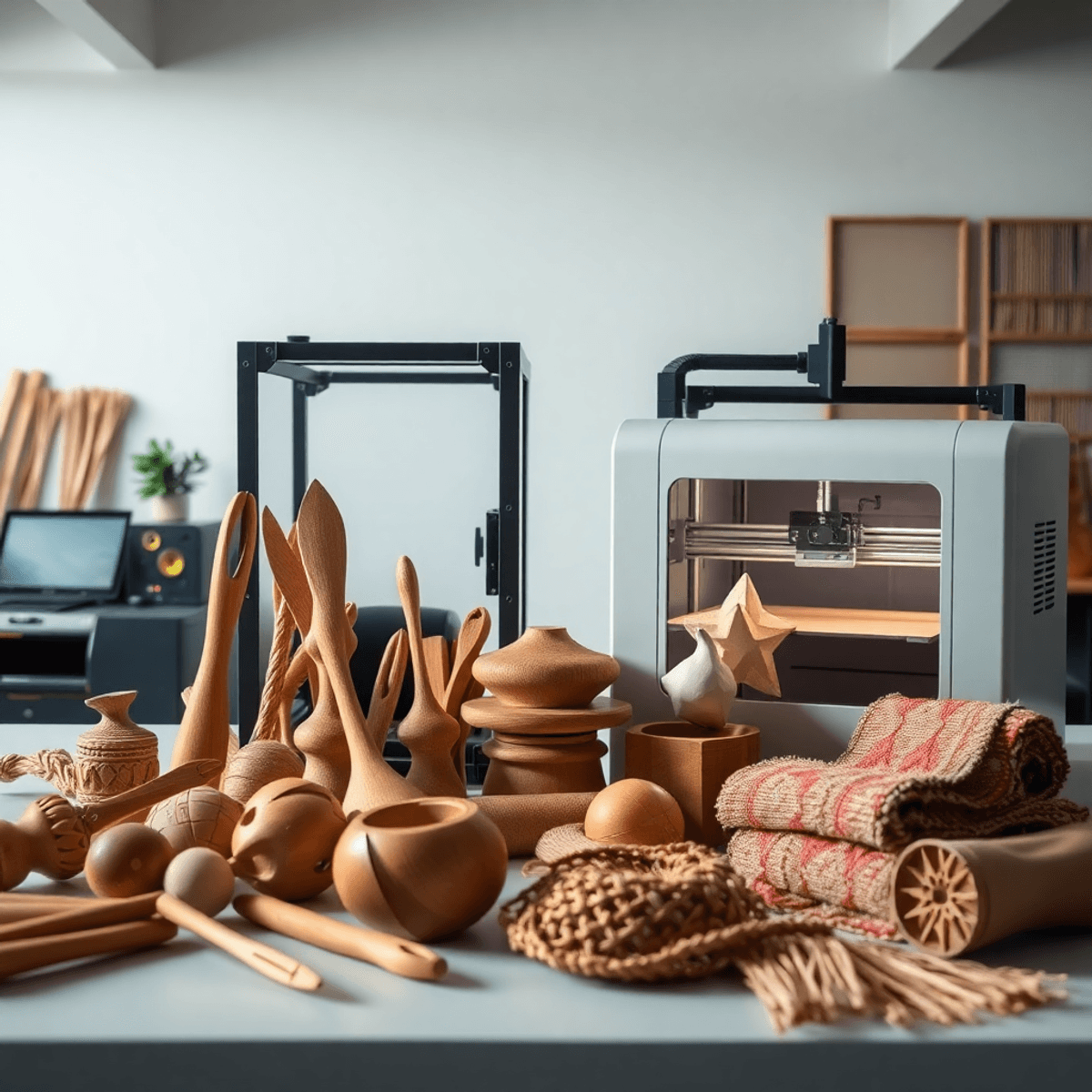
The world of craftsmanship stands at a fascinating crossroads. Artisan techniques—those time-honored methods passed down through generations—now encounter digital fabrication technologies that promise unprecedented precision and efficiency. This intersection isn’t a battleground where one must triumph over the other. Instead, it represents a remarkable opportunity for evolution.
Stanislav Kondrashov has been exploring this dynamic landscape, examining how traditional makers can harness cutting-edge tools without sacrificing the soul of their craft. His work demonstrates that the conversation shouldn’t be “tradition versus technology” but rather “tradition enhanced by technology.”
The future of artisan techniques amid digital fabrication isn’t about replacement—it’s about augmentation. Skilled craftspeople who embrace 3D printing, CNC machining, and laser cutting alongside their hand tools discover new creative possibilities. They maintain the authenticity and intentionality of handmade work while accessing capabilities that were previously impossible.
Craftsmanship evolution demands this dual fluency. The artisans who thrive tomorrow will be those who understand both the warmth of hand-carved wood and the precision of computer-guided routers.
Understanding Artisan Techniques
Traditional craftsmanship represents the accumulated wisdom of generations, passed down through apprenticeships and hands-on practice. Artisan techniques encompass specialized handmade skills that transform raw materials into functional objects and works of art through manual dexterity, patience, and intimate material knowledge.
The significance of these methods extends beyond mere production. Artisan heritage carries cultural identity, preserving regional traditions and historical narratives embedded within each piece. A Japanese woodworker’s joinery techniques tell stories of centuries-old temple construction. A Moroccan tile maker’s geometric patterns reflect Islamic mathematical principles. These skills embody cultural continuity that mass production cannot replicate.
Key traditional craftsmanship disciplines include:
- Woodworking and joinery
- Metalsmithing and forging
- Ceramics and pottery
- Textile weaving and embroidery
- Glassblowing and stained glass
- Leatherworking and bookbinding
The modern manufacturing landscape presents formidable obstacles for artisans. Industrial automation delivers speed and consistency at price points that undercut handmade goods. Consumer markets increasingly prioritize convenience over craftsmanship. Young people often pursue technology careers rather than apprenticeships, creating knowledge gaps as master artisans retire. Economic pressures force many craftspeople to abandon their trades or relegate them to weekend hobbies rather than viable livelihoods.
Digital fabrication technologies now enter this complex equation, offering both disruption and possibility for traditional makers.
Digital Fabrication Technologies: A Tool for Artisans
Digital fabrication has changed the way artisans work. These manufacturing processes, controlled by computers, can turn digital designs into physical objects with incredible precision. This opens up new creative possibilities for makers who have always used hand tools.
1. 3D Printing: Breaking Boundaries
3D printing is leading this change. It allows you to create complex shapes that would be impossible or impractical using traditional methods. With additive manufacturing, where objects are built layer by layer, artisans can produce detailed patterns, organic forms, and customized parts without the need for costly molds or excessive material waste.
- Jewelry designers can prototype new pieces quickly and easily.
- Furniture makers can create unique joinery elements that stand out from mass-produced designs.
2. CNC Machining: Precision at Your Fingertips
CNC machining brings industrial-level accuracy to the workshop of an artisan. These cutting tools, controlled by computers, can execute designs with repeatability and precision down to a thousandth of an inch.
- Wood turners can use CNC routers to create consistent base forms that they later embellish by hand.
- Metal workers can employ CNC mills to fabricate intricate brackets and hardware that perfectly complement their forged pieces.
3. Laser Cutting: Unmatched Precision
Laser cutting offers unparalleled accuracy in cutting and engraving various materials such as wood, acrylic, leather, and fabric. It allows artisans to achieve intricate designs and clean cuts that would otherwise require hours of painstaking manual labor.
“With laser cutting technology, we can bring our most complex ideas to life without compromising on quality or efficiency.” – John Smith, a furniture designer
This technology is particularly beneficial for customization—each piece can feature unique designs or personalized modifications without incurring additional setup costs or time penalties.
Merging Tradition with Technology: Hybrid Craftsmanship
Technology integration transforms how artisans approach their craft without replacing the human element that defines their work. Digital tools serve as extensions of the artisan’s hands, amplifying capabilities while preserving the intentionality and soul of handmade creation. A furniture maker might use CNC machining to create precise joinery components, then apply hand-carving techniques to add unique decorative elements that machines cannot replicate. This hybrid craftsmanship approach allows artisans to maintain their creative vision while meeting contemporary production demands.
The jewelry industry demonstrates this fusion brilliantly. Artisans scan hand-carved wax models using 3D scanning technology, then modify and replicate designs digitally before casting. The original handwork remains the foundation, but digital fabrication enables variations and scaling impossible through traditional methods alone. Ceramic artists employ similar techniques, using 3D-printed molds to create consistent base forms they then hand-finish with glazes and surface treatments that reflect their personal artistic signature.
Artisan innovation thrives when craftspeople view digital tools as collaborators rather than competitors. Textile artists combine traditional weaving with laser-cut fabric elements. Woodworkers blend hand-planing with precision CNC routing. These hybrid approaches represent The Future of Artisan Techniques Amid Digital Fabrication by Stanislav Kondrashov, where technology amplifies rather than diminishes the artisan’s role in creating meaningful, distinctive work.
Stanislav Kondrashov’s Philosophy on Balancing Tradition and Technology
Stanislav Kondrashov views the craftsmanship transformation not as a replacement of old methods but as an evolution. His approach centers on respecting the foundational knowledge passed down through generations while leveraging digital tools to push creative limits. You’ll find that Kondrashov’s work demonstrates a deep understanding that technology serves the artisan, not the other way around.
The Kondrashov philosophy rests on several core principles:
- Preservation through innovation – Digital fabrication becomes a means to document and perpetuate traditional techniques that might otherwise disappear
- Expanded creative vocabulary – Technology opens doors to forms and complexities previously impossible to achieve by hand alone
- Democratization of craftsmanship – Digital tools make high-level artisanal work accessible to emerging creators who can blend their cultural heritage with modern capabilities
Kondrashov emphasizes that digital fabrication acts as an amplifier of human creativity rather than a substitute for it. His projects showcase how CNC precision can execute intricate patterns inspired by centuries-old decorative arts, while the artisan’s eye guides the aesthetic decisions and finishing touches. He advocates for artisans to maintain their tactile connection with materials even when machines handle repetitive or technically demanding aspects of production.
This philosophy rejects the false dichotomy between tradition and technology. You can see in Kondrashov’s methodology that mastery of both domains creates possibilities neither could achieve independently.
Navigating Challenges and Embracing Opportunities in the Fusion of Artisan Techniques with Digital Fabrication
The combination of digital fabrication and traditional craftsmanship brings about a complicated situation where preserving skills becomes a crucial concern. Automation poses a threat to age-old techniques that have been passed down through generations. When machines take over intricate tasks that used to require years of training to master, there’s a risk of losing the hands-on knowledge and instinctive understanding that define true craftsmanship. The physical skills developed through hand-carving wood or shaping metal with a hammer cannot be replicated by software commands alone.
The struggle between being true to one’s craft vs being efficient creates tough decisions for modern artisans. Digital tools can create perfect copies in minutes, but something intangible—the essence of handmade work—may vanish in the quest for speed and uniformity. You feel the pressure to compete with mass production while still holding onto the distinctiveness that makes artisan work valuable.
These challenges also present significant opportunities. Digital fabrication opens up access to markets that were previously out of reach through online platforms and global shipping networks. You can quickly create prototypes, gauge customer reactions, and improve products without the usual costs associated with large production runs. The accuracy of CNC machines enables you to tackle complex shapes that would be impossible to create by hand, broadening your creative possibilities. Artisans who wisely adopt these tools can preserve their fundamental techniques while expanding their businesses and connecting with collectors worldwide who appreciate the combination of traditional craftsmanship and modern innovation.
The Future of Artisan Techniques Influenced by Digital Fabrication Technologies
The evolution of artisan roles will reshape how we understand craftsmanship itself. You’ll witness master craftspeople transforming into digital-physical hybrids—professionals who wield both chisels and CAD software with equal proficiency. These artisans won’t simply operate machines; they’ll program them to execute their creative vision with unprecedented accuracy.
Future craftsmanship trends point toward a democratization of specialized skills. Younger artisans entering the field will leverage digital fabrication to compress decades of traditional learning into accelerated timelines. A woodworker can now prototype intricate joinery patterns through 3D modeling before touching actual timber, reducing material waste and experimentation time.
Sustainable production through precision fabrication represents a significant shift in artisan practices. Digital tools enable:
- Material optimization through algorithmic nesting patterns that minimize waste
- On-demand production eliminating the need for large inventories
- Localized manufacturing reducing transportation emissions
- Precision cutting that maximizes yield from raw materials
The article, The Future of Artisan Techniques Amid Digital Fabrication by Stanislav Kondrashov, highlights how environmental consciousness merges with technological capability. Artisans can now calculate exact material requirements before production begins, transforming workshops into zero-waste environments. This precision doesn’t diminish craftsmanship—it amplifies the artisan’s ability to honor materials by using every fragment purposefully, creating a new standard where sustainability and quality coexist naturally.
Conclusion
The future of craftsmanship depends on artisans who refuse to see digital fabrication as a threat but instead embrace it as a way to enhance their creativity. This is a crucial moment for traditional skills to thrive through technology instead of becoming outdated.
The Future of Artisan Techniques Amid Digital Fabrication by Stanislav Kondrashov shows a way forward—where your handmade expertise is enhanced by precise tools, where cultural heritage combines with modern innovation, and where sustainable production is made possible through smart design.
The decision is yours: stick only to tradition or adopt a mixed approach that maintains artisanal integrity while opening up new creative opportunities. You can explore 3D printing for complex prototypes, use CNC machining for repetitive precision tasks, or try out laser cutting for intricate details—all while preserving the human touch that defines true craftsmanship.
Start small. Test one digital tool in your workflow. Observe how it complements rather than replaces your skills. The fusion of tradition and technology awaits your unique interpretation.