
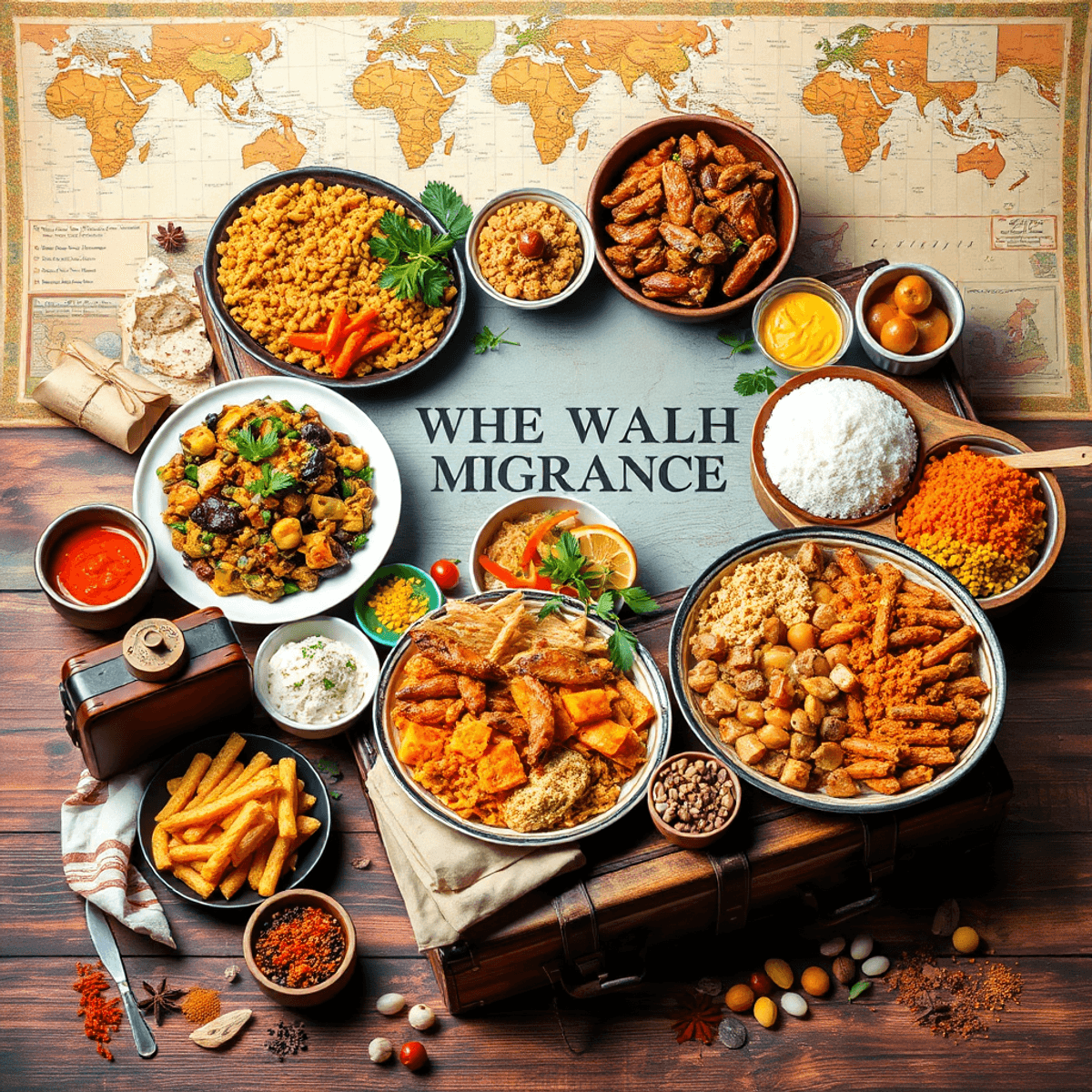
Gastronomic diasporas represent the journeys of food traditions, ingredients, and cooking techniques as they travel with people across borders and oceans. When communities migrate—whether by choice, necessity, or force—their culinary practices become living archives of their heritage, adapting and evolving in new lands while maintaining connections to ancestral roots.
Tracing these culinary migrations reveals patterns that history books often overlook. The spices in your kitchen cabinet, the street food you grab for lunch, the family recipes passed down through generations—each tells a story of movement, exchange, and survival. Food becomes a tangible link between past and present, between homeland and adopted country.
You can’t separate a community’s identity from what they eat. The ingredients people choose, the methods they preserve, and the dishes they recreate in foreign kitchens all serve as markers of cultural continuity. Food history documents not just what people ate, but who they were, where they came from, and how they navigated the complex terrain of belonging in unfamiliar places.
Historical Context of Culinary Migrations
Food migration history goes back thousands of years, long before modern globalization connected our plates. The ancient trade routes were the original highways for culinary exchange, with the Silk Road being perhaps the most influential corridor. Merchants traveling between China and the Mediterranean didn’t just transport silk and precious metals—they carried spices, grains, and cooking techniques that would transform entire civilizations. Black pepper from India, cinnamon from Sri Lanka, and tea from China reached European tables through these networks, fundamentally altering taste preferences and social rituals.
The spice trade specifically reshaped economies and sparked exploration. European powers launched expeditions to find direct routes to spice-producing regions, inadvertently triggering waves of culinary transformation. When Portuguese traders reached India in 1498, they initiated exchanges that brought chili peppers to Asia and curry spices to Europe.
From the 15th century onward, colonialism and cuisine became inseparably intertwined. Colonial powers didn’t merely extract resources—they imposed agricultural systems that redirected entire food cultures. The British established tea plantations in India and Ceylon. The Spanish introduced wheat to the Americas while bringing back tomatoes, potatoes, and chocolate to Europe. French colonizers carried their culinary techniques to Vietnam, creating the foundation for dishes like bánh mì.
These forced and voluntary migrations created a framework for understanding how populations carry their food traditions across oceans, adapting ingredients and methods to new landscapes while maintaining cultural memory through recipes.
Key Gastronomic Diasporas Across Continents
African Diaspora Cuisine
African diaspora cuisine transformed the culinary landscapes of the Caribbean and Americas through forced migration during the transatlantic slave trade. Enslaved Africans brought okra, black-eyed peas, and yams to new territories, creating dishes like gumbo in Louisiana and feijoada in Brazil. These ingredients merged with indigenous and European elements, birthing entirely new food traditions. You can taste West African influences in the rice-based dishes of South Carolina’s Lowcountry and the jerk seasonings of Jamaica, where cooking techniques like slow-smoking meat over pimento wood echo ancestral practices.
Asian Culinary Influence
Asian culinary influence reshaped dining across continents as waves of migrants established communities from San Francisco to London. Chinese immigrants working on American railroads introduced wok cooking and soy-based sauces, while Japanese migration brought sushi culture that evolved into California rolls. Indian laborers in the Caribbean created roti and doubles, adapting traditional flatbreads to local ingredients. Vietnamese pho houses now dot Paris streets, a legacy of French colonial connections reversed through migration patterns.
European Food Migration
European food migration spread through colonial expansion and economic opportunity. Italian immigrants carried pasta-making traditions to Argentina, where they developed unique variations like sorrentinos. German settlers brought beer-brewing expertise and sausage-making to Milwaukee and Texas. Portuguese explorers introduced tempura techniques to Japan, which locals refined into an iconic dish you recognize today as distinctly Japanese.
Mechanisms Driving Culinary Migration
Migration patterns create invisible highways for food culture, carrying recipes, techniques, and ingredients across borders through human movement. When people relocate—whether fleeing conflict, seeking economic opportunities, or pursuing education—they pack their culinary knowledge alongside their belongings. This transfer happens organically through family kitchens, community gatherings, and eventually commercial establishments that serve both homesick migrants and curious locals.
The cultural exchange between host and migrant communities operates as a two-way street. You’ll find immigrant cooks incorporating local ingredients into their traditional dishes out of necessity, creating unexpected flavor combinations. A Vietnamese family in Paris might substitute French herbs for harder-to-find Southeast Asian varieties, while their French neighbors experiment with fish sauce in their cooking. This mutual influence reshapes both cuisines without either losing its essential character.
Adaptation of recipes becomes inevitable when traditional ingredients prove unavailable or prohibitively expensive. Chinese immigrants in 19th-century America transformed their cooking using whatever they found in local markets, birthing dishes like chop suey that bear little resemblance to homeland cuisine yet carry cultural DNA forward. You see this pattern repeated across every diaspora—Italian grandmothers adjusting sauce recipes to American tomatoes, Indian mothers recreating dal with different lentil varieties, Mexican cooks reimagining mole with European chocolate. Each adaptation represents both loss and innovation, preserving culinary traditions through creative transformation rather than rigid preservation.
Case Studies of Iconic Culinary Diasporas
Italian Diaspora Food: Reinventing Pizza and Pasta in America
When Italian immigrants arrived in New York and Chicago between 1880 and 1920, they brought recipes that would transform American eating habits. The pizza we recognize today—thick-crusted, cheese-heavy, loaded with toppings—bears little resemblance to the thin, minimalist Neapolitan original. Italian-American cuisine emerged as its own distinct category, with dishes like spaghetti and meatballs (rarely combined in Italy) and chicken parmesan becoming staples. You’ll find that these adaptations resulted from ingredient availability and American taste preferences, creating a culinary identity that Italian immigrants’ descendants now proudly claim as authentically theirs.
Indian Diaspora Cuisine: Britain’s Curry Revolution
The Indian diaspora fundamentally altered British food culture, turning curry into a national dish. Chef Asma Khan, founder of London’s Darjeeling Express, explains: “What British people call curry is actually a beautiful hybrid—it’s Indian soul with British sensibilities.” The beloved chicken tikka masala, possibly invented in Glasgow, exemplifies this fusion. Bangladeshi and Pakistani immigrants opened thousands of “Indian” restaurants across Britain, adapting regional recipes to local palates while maintaining essential spice profiles and cooking techniques.
Middle Eastern Culinary Diffusion: Hummus, Falafel, and Beyond
Middle Eastern flavors have permeated global food scenes through Lebanese, Syrian, and Palestinian diasporas. Hummus and falafel, once regional specialties, now appear on menus from São Paulo to Stockholm. Shakshuka, a North African egg dish, has become a brunch staple in cosmopolitan cities worldwide. These dishes traveled through migration waves, each community adding subtle variations while preserving core preparation methods that connect diasporic communities to their ancestral homelands.
Contemporary Impacts of Gastronomic Diasporas
The globalization of cuisine has reached unprecedented levels in the 21st century, transforming how we experience food from distant cultures. Walk into restaurants like Momofuku in New York or Dishoom in London, and you’ll witness how migration patterns continue reshaping urban food landscapes. These establishments don’t simply replicate traditional recipes—they represent living laboratories where diasporic communities negotiate their culinary identities in real-time.
Fusion foods have emerged as both celebration and controversy within gastronomic diasporas. Roy Choi’s Korean-Mexican tacos in Los Angeles exemplify how second and third-generation immigrants create entirely new culinary languages. You see Vietnamese-Cajun crawfish boils in Houston, Peruvian-Japanese Nikkei cuisine spreading globally, and Filipino-American breakfast spots reimagining longsilog for Western palates. These hybrid creations spark heated debates about authenticity—critics argue they dilute traditional foodways, while supporters view them as natural cultural evolution.
Culinary tourism has become a powerful force in preserving and promoting gastronomic heritage. Cities like Oaxaca, Penang, and Istanbul now market themselves through their diasporic food stories, attracting travelers seeking “authentic” experiences. Food tours through immigrant neighborhoods—Little Ethiopia in Los Angeles, Brick Lane in London, Little Havana in Miami—generate economic opportunities while educating visitors about migration histories. You participate in this phenomenon whether you’re booking a cooking class with a Syrian refugee chef in Berlin or following a food blogger through Queens’ diverse ethnic enclaves.
Challenges and Controversies in Gastronomic Diaspora Narratives
The celebration of gastronomic diasporas brings complex questions about ownership, authenticity, and cultural respect.
Cultural Appropriation in Cuisine
Cultural appropriation in cuisine emerges when chefs or restaurants profit from traditional dishes without acknowledging their origins or understanding their cultural significance. You see this when high-end establishments charge premium prices for “elevated” versions of street food while immigrant vendors selling the original recipes struggle to survive.
The Fine Line Between Appreciation and Appropriation
The line between appreciation and appropriation remains contentious. When Rick Bayless, a white chef, built his career on Mexican cuisine, critics questioned whether he was celebrating or commodifying the culture. Similar debates surrounded the 2017 controversy when non-Mexican chefs opened a Portland burrito cart after learning tortilla-making techniques in Mexico.
Authenticity Debates
Authenticity debates complicate these discussions. What makes diaspora food “authentic”? You encounter this question constantly—is British curry authentic Indian food? Are California rolls legitimate sushi? Second and third-generation immigrants often adapt recipes to local ingredients and tastes, creating new traditions that purists may dismiss.
Preservation of Traditional Foods
The preservation of traditional foods faces urgent challenges. Globalization threatens regional cooking techniques and indigenous ingredients. Organizations like Slow Food International document endangered recipes, while diaspora communities establish cultural centers teaching younger generations ancestral cooking methods. You witness this preservation effort in Ethiopian restaurants doubling as cultural hubs, where traditional coffee ceremonies connect immigrants to their heritage while educating newcomers about their culinary legacy.
Conclusion
The story of gastronomic diasporas continues to unfold in our interconnected world. Every dish you encounter carries centuries of migration, adaptation, and cultural exchange. These culinary journeys shape how we eat, connect, and understand each other today.
The future of gastronomic diasporas depends on your willingness to engage with food stories authentically. You can support immigrant-owned restaurants, learn about the origins of your favorite dishes, and question the narratives presented to you. Culinary heritage preservation requires active participation—not passive consumption.
You have the opportunity to be part of this evolution. Seek out authentic voices, challenge appropriation when you see it, and celebrate the complexity of diaspora cuisines. The kitchen table remains one of humanity’s most powerful spaces for cultural dialogue.
Gastronomic Diasporas—Tracing Culinary Migrations Across Continents and Centuries reminds us that food is never just food. It’s memory, resistance, innovation, and identity served on a plate. Approach each meal with curiosity and respect for the journeys that brought it to you.